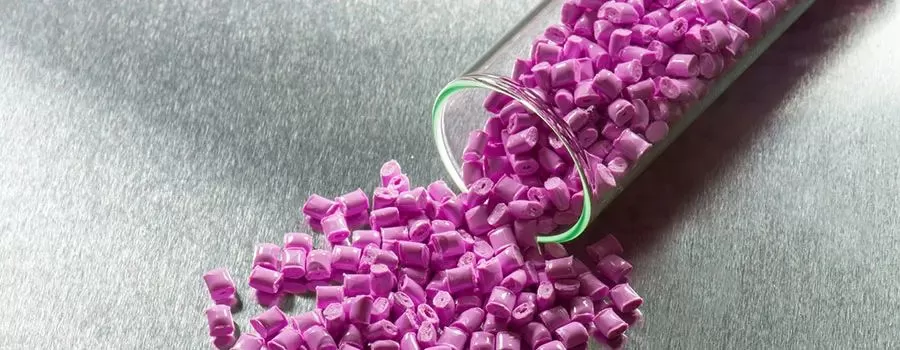
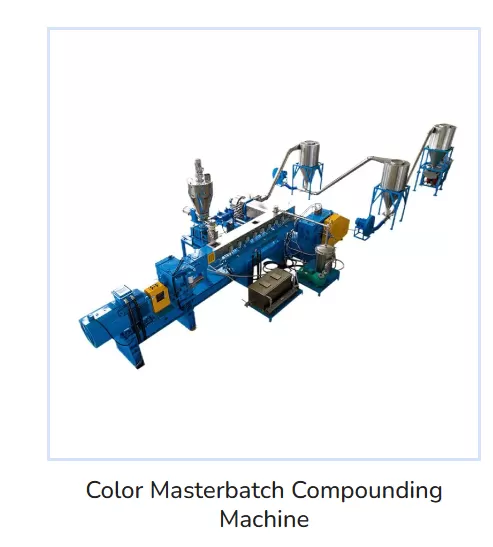
Color Masterbatch, also known as colorants, is a new type of specialized coloring agent for polymer materials, also known as pigment preparation.
It is composed of three basic elements: pigments or dyes, carriers, and additives. It is an aggregate obtained by uniformly attaching a super constant amount of pigments or dyes to a resin, which can be called pigment concentration. Therefore, its coloring power is higher than that of the pigment itself.
In short, a colorant is an aggregate made by uniformly attaching a super constant pigment or dye onto a resin.
The basic components of color masterbatch are:
Pigments or dyes
Pigments are divided into organic pigments and inorganic pigments.
Common organic pigments include phthalocyanine red, phthalocyanine blue, phthalocyanine green, sun resistant bright red, macromolecular red, macromolecular yellow, perpetual yellow, perpetual purple, azo red, etc.
Common inorganic pigments include cadmium red, cadmium yellow, titanium dioxide, carbon black, iron oxide red, iron oxide yellow, etc.
Carrier
The carrier is the matrix of the color masterbatch. Special colorants generally choose the same resin as the product resin as the carrier, which has the best compatibility between the two, but at the same time, the flowability of the carrier should also be considered.
Dispersant
To promote uniform dispersion of pigments and prevent agglomeration, the melting point of dispersants should be lower than that of resins, have good compatibility with resins, and have good affinity with pigments. The most commonly used dispersants are polyethylene low molecular wax and stearic acid salt.
Additives
Varieties such as flame retardant, brightening, antibacterial, anti-static, antioxidant, etc. are generally not included in the color masterbatch unless requested by the customer.
The commonly used classification methods for masterbatch are as follows:
Classified by carrier: such as PE masterbatch, PP masterbatch, ABS masterbatch, PVC masterbatch, EVA masterbatch, etc;
Classified by purpose: such as injection colorants, Blow Molding colorants, spinning colorants, etc.
Each variety can be divided into different grades, such as:
Advanced injection masterbatch: used for cosmetic packaging boxes, toys, electrical casings, and other high-end products.
Ordinary injection masterbatch: used for general daily plastic products, industrial containers, etc.
Advanced blown film masterbatch: used for blow molding coloring of ultra-thin products.
Ordinary blown film masterbatch: used for blow molding coloring of general packaging bags and woven bags.
Spinning masterbatch: used for coloring textile fibers during spinning. The colorants have fine pigment particles, high concentration, strong coloring power, and good heat and light resistance.
Low level color masterbatch: used to manufacture low-level products that do not require high color quality, such as trash cans, low-level containers, etc.
Special color masterbatch:
It is a color masterbatch manufactured using the same plastic as the carrier based on the plastic variety specified by the user for the product. For example, PP masterbatch and ABS masterbatch are respectively used as carriers.
Universal masterbatch: It also uses a certain resin (often low melting point PE) as a carrier, but it can be applied to coloring other resins besides its carrier resin.
Universal colorants are relatively simple and convenient, but they have many drawbacks. The heat resistance level of specialized colorants is generally suitable for the plastic used in the product, and can be used with confidence at normal temperatures. Only in the following situations can it cause varying degrees of discoloration: one is when the temperature exceeds the normal range, and the other is when the shutdown time is too long.
Compared with granulation coloring, masterbatch coloring has the following advantages:
9.1 Coloring and product processing can be completed in one go, avoiding the heating process of granulation coloring on plastics, which is beneficial for protecting the quality of plastic products.
9.2 Simplify the production process of plastic products.
9.3 can save a lot of electricity.
The use of masterbatch has the following advantages:
Improve the dispersibility of pigments in products
Masterbatch is an aggregate made by uniformly attaching a super constant pigment to a resin.
During the production process of colorants, it is necessary to refine the pigments to improve their dispersibility and coloring power. The carrier of the specialized color masterbatch is the same as the plastic variety of the product, with good compatibility. After heating and melting, the pigment particles can be well dispersed in the plastic of the product.
Beneficial for maintaining the chemical stability of pigments
If pigments are used directly, they will absorb water and oxidize due to direct contact with air during storage and use. However, after being used as colorants, the resin carrier can isolate the pigments from air and moisture, which can maintain their quality for a long time.
Ensure the stability of product color
Color masterbatch particles are similar to resin particles, making measurement more convenient and accurate. When mixed, they do not adhere to the container and mix evenly with the resin. Therefore, the stability of the addition amount can be ensured, thereby ensuring the stability of the product color.
Protect the health of operators
Pigments are generally in powder form and are prone to flying when added and mixed. Inhalation by the human body can affect the health of operators.
Keep the environment clean and do not contaminate utensils

Simple process, easy color conversion, saving time and raw materials
Due to the direct contact of pigments with air during storage and use, phenomena such as moisture absorption, oxidation, and agglomeration may occur. Direct use can result in color spots on the surface of plastic products, darkening and fading colors, and causing dust to fly during mixing, affecting the health of operators.
During the production process, the color masterbatch undergoes mechanical processing to refine the pigments. The pigments are thoroughly mixed with resin carriers and dispersants to isolate them from air and moisture, thereby enhancing their weather resistance, improving their dispersibility and coloring power, and resulting in a bright color. Due to the similar shape of color masterbatch and resin particles, it is more convenient and accurate in measurement, and will not adhere to the container during mixing, thus saving time for cleaning containers and machines, as well as raw materials used for cleaning machines.
How to use masterbatch?
The use of colorants is very simple, just mix them with resin particles according to the specified ratio and manually mix them.
Attention should be paid to the following issues during device operation:
1.1 Injection molding machines or Extruder generally have multiple temperature zones in the mixing chamber, with the section near the discharge port having a slightly higher temperature. This is to ensure that the colorants quickly melt and mix evenly with the plastic resin after entering the mixing chamber, which is beneficial for the colorants to be well dispersed in the product.
1.2 Apply appropriate back pressure to the injection molding machine, which can improve the mixing effect of the screw and facilitate the dispersion of pigments. The side effect of applying back pressure is to slow down the injection molding speed.
1.3 Increasing the temperature of the extruder die appropriately can increase the brightness of the product.
How to determine the proportion of masterbatchused?
The basis for determining the proportion of colorants used is to achieve satisfactory coloring effects. As long as the surface color of the product is uniform, without stripes or spots, it can be recognized.
Taking the example of the Seven Colored Deer Mother, the usage ratio can be selected according to the following text:
1:100 Unless the mixing performance of the equipment is very good, it is easy to cause uneven pigment dispersion, and it is generally not recommended for customers to use this ratio.
However, some customers, due to price pressure, particularly wish to use this ratio of color masterbatch. For the sake of their customers, they also produce a higher proportion of concentrated color masterbatch, and the dispersibility of the pigment can generally meet the requirements.
1:50 is used for plastic products with general coloring requirements, and this ratio is more commonly used for PE and PP masterbatch.
1:33–1:25 is used for PO products with high coloring requirements, and ABS products with low or general coloring requirements.
1:20 is used for advanced plastic products, including PO and ABS, and can be widely used in injection molding, blow molding, spinning and other processes.
Above 1:20 is generally used for coloring high-end cosmetic containers and is more commonly used for small injection molding machines.
How to calculate the use cost of the masterbatch?
When calculating the cost of coloring with masterbatch, the weight of the colorants themselves should be deducted.
For example, if 2 kilograms of masterbatch are added to 100 kilograms of plastic resin, the total weight is already 102 kilograms. Assuming the resin price is 1.40usd/kilogram and the masterbatch price is 2.90 usd/kilogram, the additional cost of using colorants in 102 kilograms of plastic products is:
2 kg x (2.90usd/kg -1.40usd/kg)=3.0 usd
The cost increase due to the use of masterbatch per 100 kilograms of plastic products is calculated as follows:
2.9 usd/102 kg x 100 kg=2.84usd
Will using masterbatchincrease product costs?
In most cases, this is the case. But in some cases, using masterbatch for coloring is actually more economical than using pigments for coloring, because colorists can achieve the coloring effect of higher priced pigments by combining several lower priced pigments.
We also need to consider the following two phenomena:
(1) In many cases, plastic product manufacturers do not choose the most economical pigments when using color powder for color matching, and due to insufficient familiarity with pigments, repeated experiments during color matching result in widespread waste of manpower and materials. There is no such problem when using masterbatch.
(2) Products colored with masterbatch and products colored with color powders have completely different grades, and their prices are also higher. The higher prices are often higher than the additional costs of using masterbatch, so masterbatch can actually create "profits". From this perspective, in some cases, using colorants for coloring is more "economical" than using pigments for coloring.
Do masterbatchneed to be dried before use?
Color masterbatch generally does not require drying and can be used directly, except for ABS and NY color masterbatch, which should be dried according to conventional processes.
How long is the shelf life of masterbatch?
Color masterbatch can be stored for a long time. The pigments in the color masterbatch are dispersed and fixed in the carrier resin, in a closed state, and their quality will not change even after long-term storage. But it should be stored in a dry and cool environment.
Can we use several different masterbatchto mix colors?
Several masterbatch can be used to prepare specific colors for small quantities of customers, but without the guidance of company technicians, customers cannot independently combine several masterbatch or mix masterbatch produced by different companies to avoid incompatibility and losses.
Will the use of masterbatchaffect other properties of the product?
Some pigments have an impact on the flame retardant effect of products. When used in flame retardant products, it should be pointed out to the color masterbatch manufacturer.
Does the mold affect the use of masterbatch?
In order to fully display the coloring effect of the color masterbatch, the mold must have corresponding quality, especially the surface must be very smooth.
Appendix: Performance of Pigments
Heat resistance
PVC and PE pigments have a temperature resistance of 160-180 degrees Celsius;
The pigments of ABS and PS have a temperature resistance of 250-280 degrees Celsius;
PP, PA, PET pigments have a temperature resistance of over 280 degrees Celsius;
Generally, the heat-resistant time of pigments is required to be 4-10 minutes. Generally, the higher the temperature used, the shorter the heat-resistant time. Phthalocyanine blue pigment can withstand a temperature of 325 degrees Celsius and change color in 10 minutes.
Transferability
The migration resistance of pigments refers to the physical and chemical reactions that may occur between colored plastic products and other solid, liquid, gas, and other states, substances that come into long-term contact or work in a specific environment. This is manifested by the migration of pigments from the interior of the plastic to the free surface of the product, or to adjacent plastics or solvents.
Rating criteria for migration resistance | ||||
Level 1 | Level 2 | Level 3 | Level 4 | Level 5 |
Severe migration | Significant migration | Migration | Minor migration | No migration |
Most inorganic pigments have good light resistance.
Weather resistance refers to the color stability of pigments under natural conditions.
Titanium dioxide, also known as titanium dioxide, is divided into anatase type (A) titanium dioxide and rutile type (R) titanium dioxide.
Titanium dioxide can improve coverage, weather resistance, fade resistance, etc., and can effectively scatter visible light in plastics, giving them whiteness, brightness, and opacity.
When the concentration of titanium dioxide is low, the whiteness of PP increases with the rate of increase of its content. When the concentration exceeds 1.5%, the whiteness no longer increases. From 1% to 8%, the whiteness only increases by 2.8%. This indicates that increasing the amount of titanium dioxide beyond a certain concentration range cannot improve whiteness. To further improve whiteness, fluorescent whitening agents can be used, which can significantly enhance the coloring power of titanium dioxide with only a small amount of fluorescent whitening agent.
The concentration of titanium dioxide in PP/ABS is 1%; 4% in PVC; As the amount of titanium dioxide increases, its coverage gradually improves and tends to equilibrium when the concentration exceeds 8%.
In general, the finer the titanium dioxide particles, the higher their coloring power and stronger their covering power.
Cadmium yellow has strong coloring power, excellent light resistance and weather resistance, and does not migrate or bleed.
This product can be used as a yellow coloring agent for plastics, with bright colors, excellent light resistance, heat resistance, solvent resistance, water resistance, and alkali resistance. However, it is not acid resistant, coloring, and has low covering power.
Ultramarine has the functions of whitening and color adjustment, as it can remove yellow light from white products.

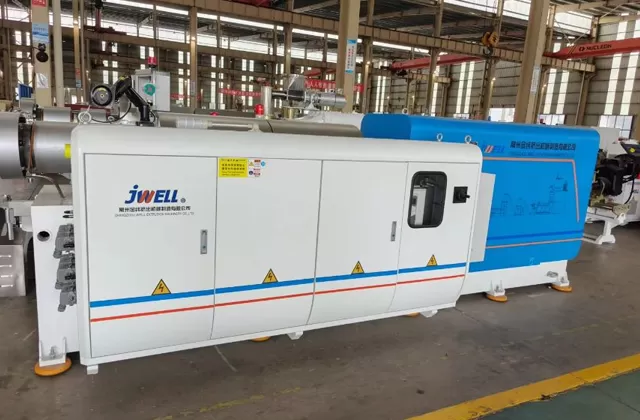
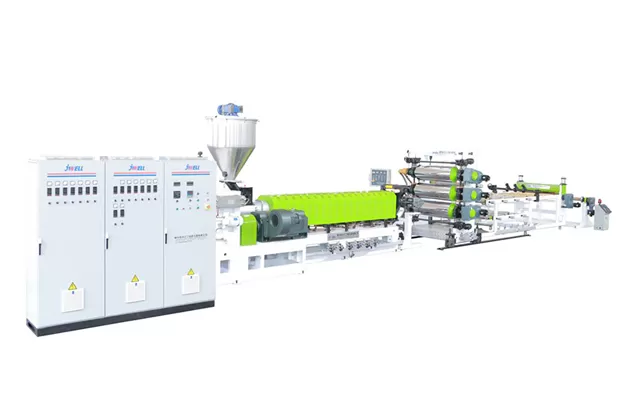
Jwell started manufacturing screws and barrels in 1978, making it one of the earliest screw and barrel manufacturers in China. Its brand, "Jinhailuo", has become well recognized in the industry. In 1997, Jwell was established to begin the production of extrusion machinery. Today, Jwell is the vice president unit of the China Plastics Machinery Industry Association and one of the technology leaders in the extrusion machinery industry.