In the process of producing engineering plastic particles, there is a certain probability of encountering irregular particle shapes and the presence of impurities. Below, we will briefly explain the reasons for the formation of these situations and the solutions.
Long strip: Any length greater than twice the normal particle size is considered a long strip
Reasons for occurrence: mainly due to startup pulling or breakage of the strip, non straight direction of the strip, improper soaking of the strip in water, and wear or gaps in the cutting tools of the pelletizer.
Solution:
1) During normal production, adjust the direction of the material strip entering the granulator and adjust the immersion length;
2) Severe breakage during production requires adjustment of Extrusion Process;
3) Pay attention to the inspection of the cutting blade and replace damaged blades in a timely manner;
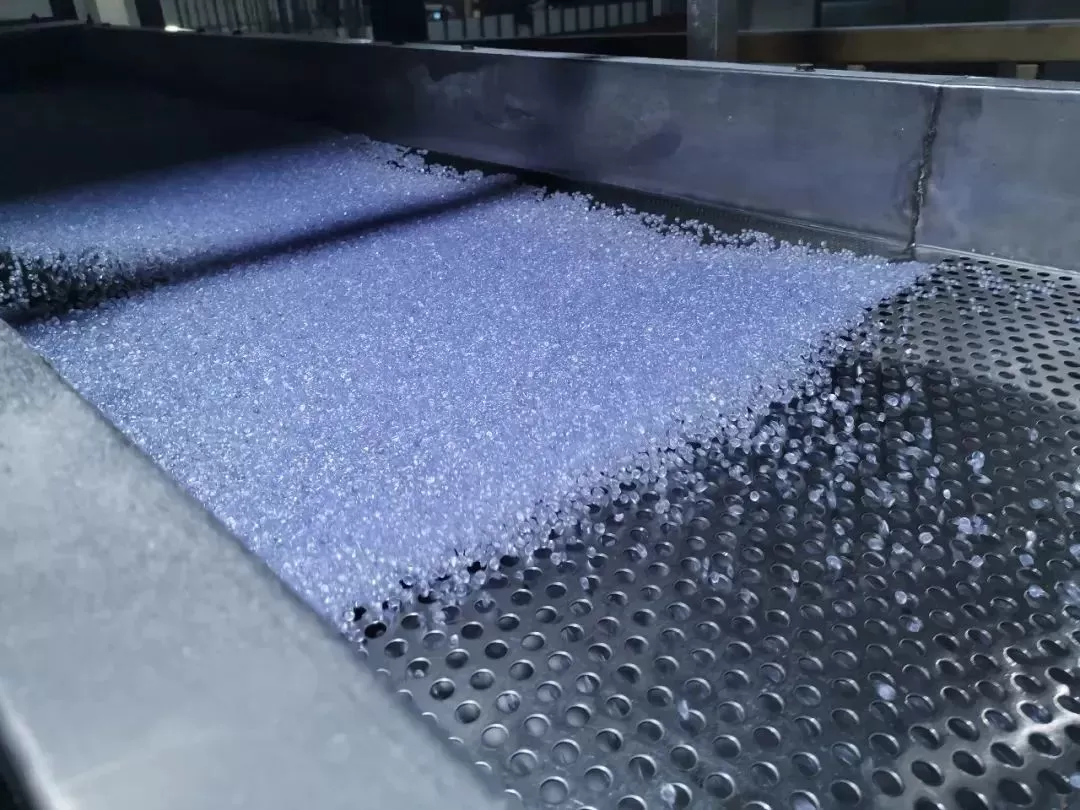
4) Suitable vibrating screens can be used to screen the long strips that appear.
Connecting particles: Two or more particles connected side by side are called connected particles
Reasons for occurrence: mainly due to failure to timely separate or break the pull rod during driving, insufficient immersion length, and high head temperature.
Solution:
1) When extruding the pull rod, choose a nylon wheel with a suitable width as the guide strip, and timely separate the material strips that are stuck together;
2) Adjusting the appropriate length of cooling immersion to prevent overheating of the material strip can reduce the number of consecutive particles;
3) Properly reduce the temperature of the machine head and adjust the temperature of the material strip;
4) For the occurrence of continuous particles, a vibrating screen with appropriate mesh size can be used for screening.
Centipede strips: Two or more pieces of food that have not been cut open and are connected together are called centipede strips
Reasons for occurrence: The speed of driving the pulling rod varies from fast to slow, the discharge port of the twin-screw Extruder emits material, the immersion length is not enough, the cutting tool of the pelletizer is worn, or the gap between the fixed and moving blades is too large.
Solution:
1) When the operator pulls the strip, it should be done at a constant speed to avoid the material being too thick;
2) Adjust the appropriate extrusion process to avoid material overflow from the discharge port;
3) Adjust the appropriate cooling immersion length to avoid overheating of the strip;
4) Adjust the gap between the fixed tool and the moving tool, and replace with a new tool if necessary.
Black dots: black spots on the surface or inside of particles
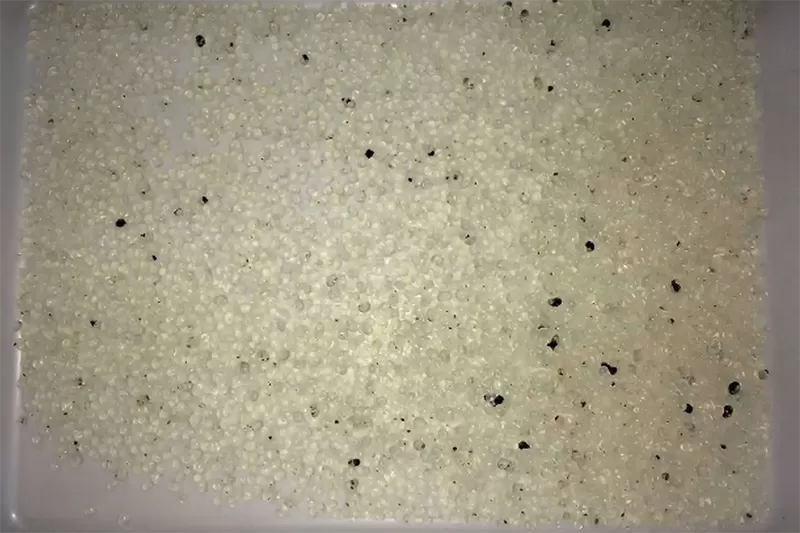
Main reason: The pumping screw is not delivered clean; There are black spots in the raw materials; Screw carbonization; Environmental pollution; Artificially brought in.
Solution:
1) During the process of converting the product screw, if it is not cleaned thoroughly, the screw can be pulled again; Cleaning points: "Three ports", the mesh plate and large machine head behind the filter screen;
2) Strengthen incoming material inspection, especially in filling mineral powder or flame retardants where black spots and impurities are more likely to occur; For example, Z30S or T30S particles containing wood chips in the packaging, low-grade mineral powder fillers or flame retardants; These cannot be used to produce modified plastics with strict black dot requirements
3) Pay attention to controlling and adjusting the temperature of the machine barrel and the residence time of materials inside the barrel to prevent excessive processing temperature; Design the corresponding extrusion process for each product based on its formula;
4) It is necessary to pay attention to the hygiene of the surrounding environment and keep the ground moist, and to isolate and protect the machines for producing products of different colors;
5) Regularly clean the auxiliary equipment of the extrusion equipment, such as the sink and pelletizer;
6) Every time the mesh is changed, it is necessary to clean up the remaining materials on the mobile mesh board and template to prevent carbonization over time;
7) Pay attention that the ground material strip is strictly prohibited from entering the granulator to prevent dust from being carried in;
8) Anti plastic static electricity generation, static electricity easily absorbs dust.
Color change: manifested as a sudden change in product color during the production process, resulting in significant color differences
Cause: Uneven or incorrect mixing of materials; The cleaning machine is not clean; The temperature is too high; Shear too strong; The admixture contains impurities.
Solution:
1) Strictly follow the mixing process to ensure the uniformity and correctness of the mixture;
2) After the cleaning is completed, a dedicated person will inspect to ensure that the cleaning is clean;
3) Control the extrusion temperature to prevent excessive temperature from causing color powder decomposition;
4) Choose the appropriate screw combination to avoid excessive shearing;
5) Ensure that there are no impurities in the backfill material.
Vacuum defective particles: There are two or more vacuum holes or foaming phenomena on the cutting surface
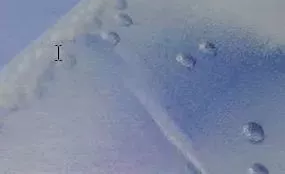
Reasons for occurrence: insufficient vacuum degree, vacuum return, damaged vacuum system, poor sealing, etc.
Solution:
1) Regularly inspect and maintain the vacuum pump and vacuum pressure gauge;
2) Timely clean the vacuum tank, vacuum chamber, and vacuum pipeline;
3) Properly control the flow rate of circulating water in the vacuum pump;
4) Solve vacuum return and ensure the sealing of the vacuum cover is good.
Iron filings or other metal particles: There are iron filings or other metal particles on the surface or in the middle of plastic particles
Causes: Screw wear, broken moving blade, iron filings or other metal particles in the raw materials.
Solution:
1) Check if the screws, moving knives, vibrating screens, etc. are damaged;
2) Check if there are corresponding metal particles in the raw materials;
3) For defective products, strong magnetic or other metal separators can be used to screen out metal particles;
4) Add a filter screen to non enhanced vehicles.
Poor plasticization: Difficult to melt or surface blackening observed from the cross-section of particles
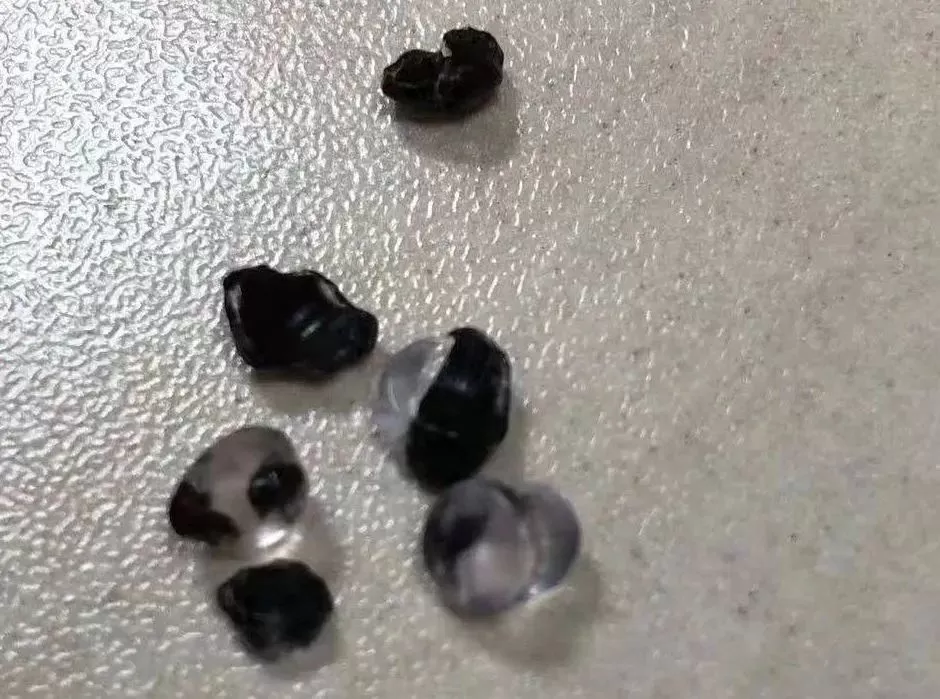
Causes: low heating temperature, impurities in raw materials, excessive feeding speed, weak screw shear, and too much lubricant in the formula.
Solution:
1) Control the temperature according to the process regulations, and adjust the temperature appropriately when poor plasticization is found;
2) Check if there are impurities or insoluble substances mixed in the raw materials or process;
3) Properly control the feeding speed to increase the heating and plasticizing time of the plastic inside the screw;
4) Choose a screw combination with moderate shear capacity;
5) Adjust the formula appropriately.
Excessive moisture: shiny water visible from the surface of the material strip, or feeling moisture in the material particles by hand, or dripping water from the bottom of the pelletizer, and similar phenomena
Cause of occurrence: The material strip is soaked in too much water, the strip is not divided in time when driving, the speed of the granulator is too fast, the wind force of the blade is too small, and the distance between the granulator and the blade is too close.
Solution:
1) Adjust the length of the strip soaked in water appropriately;
2) When pulling, the material strip is immediately divided into strips after entering the granulator;
3) Adjust the speed of the granulator appropriately, and at the same time, adjust the height of the material bar support appropriately;
4) Ensure that the wind blade is strong enough, and if necessary, use two wind blades;
5) Adjust the distance between the granulator and the air knife appropriately.
Crushed material strip: After being cut by a granulator, many small fragmented particles are produced
Reason for occurrence: Due to plastic static electricity, the main reasons for their adsorption at the material inlet of the vibrating screen are excessive soaking of the material strips, wear of the cutting tools of the pelletizer, excessive filling, and hard material strips.
Solution:
1) Adjust the amount of water soaked in the strip appropriately;
2) Replace the cutting tool with a new one;
3) Adjust the formula appropriately to reduce the distance between the granulator and the air knife.
Carbonization: The leaked material at the mold head turns into black material, and granular burnt materials appear on the plastic surface
Cause: Heating temperature is too high, causing melt scorching; The screw has been used for a long time without cleaning, resulting in the accumulation of burnt materials; The downtime was too long, and the machine head and screws were not cleaned.
Solution:
1) Regularly check if the heating system is functioning properly, and promptly resolve any issues with the heating system;
2) Regularly pull out screws or clean the machine head, thoroughly clean it up;
3) The mesh plate, filter screen, and mold head should be cleaned in a timely and clean manner to prevent carbonization. If carbonization is found, the machine head and screw should be cleaned immediately. Clean and prevent carbonization. If carbonization is found, the machine head and screw should be cleaned immediately.