Color masterbatch is one of the most commercially important products in plastic compounding because it turns raw pigments and additives into a dosing-friendly, consistent, and scalable coloring system. Yet not all masterbatch pellets are equal. Two formulations may use the same pigment family and still deliver very different color strength, dispersion, filter behavior, and final product appearance. For that reason, successful masterbatch production depends on more than simply feeding pigment into an extruder. It depends on matching formulation design, carrier compatibility, screw configuration, thermal control, venting, filtration, and pelletizing to the intended end use.
For buyers planning a new line, the biggest question is usually not “Can the line make pellets?” The bigger question is whether the line can make pellets with stable dispersion, repeatable color performance, acceptable output, and a quality level that processors trust in blown film, injection molding, sheet, pipe, fiber, or profile applications. Poorly compounded color masterbatch can cause specks, poor tinting strength, color drift, plate-out, screen blockage, filter pressure rise, and unstable processing at the customer’s factory.
This article explains the technical and commercial logic of color masterbatch compounding. It focuses on the three buying themes that matter most: dispersion, carrier selection, and pellet quality. It also includes a comparison table, six FAQs, and practical guidance on evaluating a compounding line supplier.
A masterbatch extruder is a compounding system that disperses pigments and additives into a compatible carrier resin before the melt is filtered and pelletized.
A typical color masterbatch contains three basic parts. The first is the pigment system, which provides the target color. The second is the carrier resin, which holds and transports the pigment into the downstream polymer. The third is the additive package, which may include dispersants, lubricants, processing aids, stabilizers, or other functional ingredients. These components are mixed, melted, distributed, dispersed, devolatilized where needed, filtered, and pelletized.
Commercial let-down ratio depends on formulation and end use, but many color masterbatches are used at roughly 1% to 5% addition in the final product. Some highly loaded systems may operate at lower or higher percentages depending on pigment strength and application. Because the concentrate is used in small amounts, consistency is critical. A small variation in the pellet can become a visible variation in the final product.
A masterbatch extruder improves pigment dispersion by combining controlled shear, distributive mixing, residence time and temperature management to break down agglomerates.
It is important to distinguish between distribution and dispersion. Distribution means the pigment is spread throughout the melt. Dispersion means agglomerates are broken down to a sufficiently fine level. A pellet may look visually acceptable and still perform badly if pigment clusters remain. In downstream processing, those clusters can appear as streaks, specks, poor gloss, pinholes, or inconsistent color strength.
High-quality dispersion depends on several factors at once: pigment chemistry, surface treatment, carrier compatibility, feeding accuracy, screw design, residence time, shear profile, and process temperature. Excessive shear can damage certain pigments or resins, while insufficient shear leaves agglomerates intact. The goal is therefore not maximum mechanical intensity but controlled and application-appropriate dispersion.
In many commercial operations, color consistency is monitored using instrumental color measurement. Depending on the product standard, processors may target a Delta E value around 1.0 to 2.0 or tighter for demanding applications, though the acceptable limit varies by customer and end use. Good dispersion is one of the main factors that helps keep such targets achievable.
Carrier resin selection for a masterbatch extruder determines pigment wetting, polymer compatibility, downstream processing stability and final color performance.
The first principle is compatibility with the end-use polymer. A PE-based masterbatch is commonly used in PE applications, PP-based in PP, PET-based in PET, and so on. In some cases, broader compatibility systems are possible, but they should not be assumed. If the carrier and end-use resin are poorly matched, the final product may suffer in dispersion, mechanical performance, transparency, or process stability.
The second principle is processing behavior. The carrier should support good pigment incorporation and allow stable extrusion without unnecessary thermal or shear stress. A carrier that softens too early or too late relative to the rest of the formulation can complicate dispersion. Viscosity relationship matters as well. In some systems, the carrier must help wet difficult pigments, while in other systems the priority is maintaining end-use mechanical performance.
The third principle is application economics. A technically compatible carrier may still be commercially weak if it is too expensive or too narrow in downstream use. Good masterbatch design therefore balances performance with the commercial realities of let-down ratio, end-use flexibility, and supply stability.
When buyers evaluate a compounding extruder, they should check whether the supplier discusses carrier selection as part of the process design. In masterbatch production, formulation and machine design cannot be separated.
A masterbatch extruder controls feeding and dosing through accurately matched feeders, stable material flow and a screw layout designed for the formulation ratio.
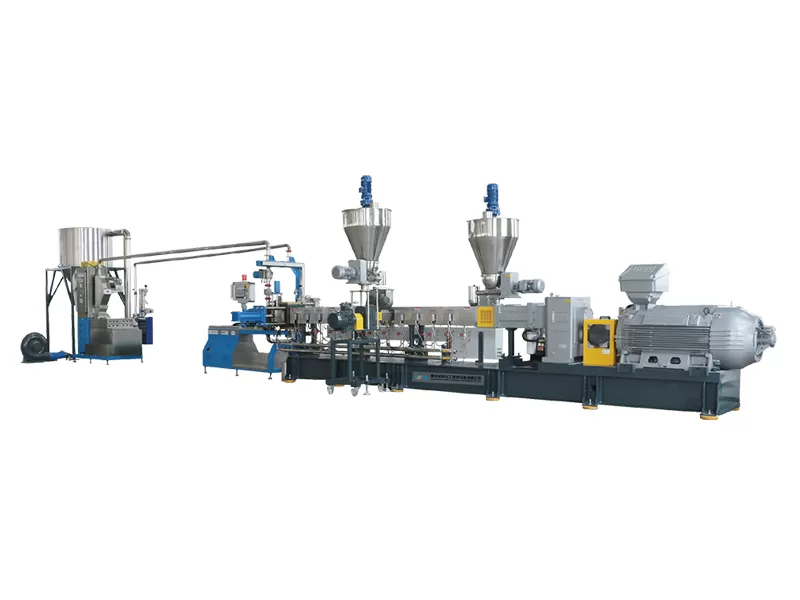
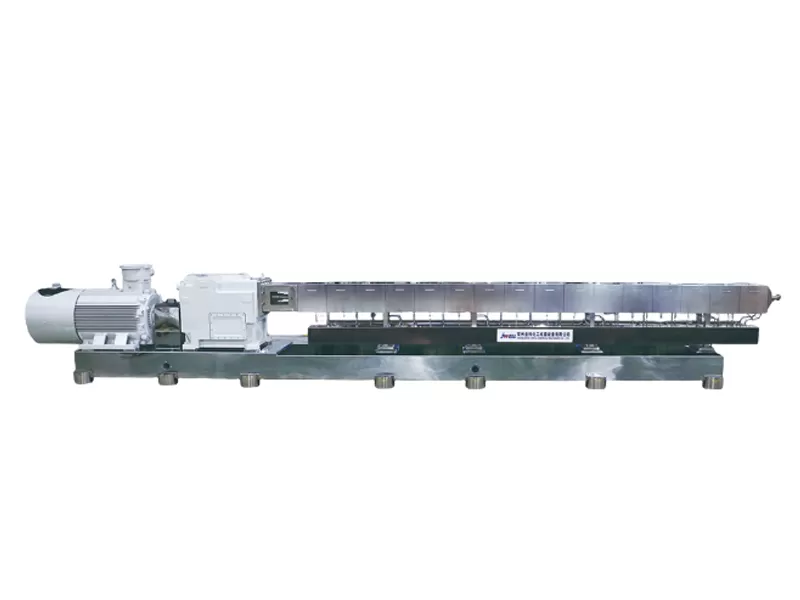
Color masterbatch is typically associated with co-rotating twin-screw technology because it provides strong mixing flexibility and modular screw configuration. Feeders can introduce resin, pigment, fillers, and additives at controlled points. Kneading blocks and conveying elements can be arranged to create the required energy input. Venting sections can remove moisture, air, or volatile components. The process can be tuned according to pigment loading and formulation sensitivity.
Throughput can vary widely. Small laboratory systems may run only a few kilograms per hour, while commercial masterbatch lines can run from tens of kilograms per hour into the hundreds or more depending on screw size, formulation, and required quality standard. However, a higher throughput number is not always better. A line producing 500 kg/h with poor dispersion is less valuable than a line producing 420 kg/h of stable, saleable masterbatch pellets.
That is why buyers comparing a plastic extrusion machine supplier for masterbatch production should ask how screw design changes for organic pigments, inorganic pigments, black masterbatch, white masterbatch, or filler-containing systems. Generic claims are less useful than application-specific engineering logic.
Screw configuration affects masterbatch extruder performance by controlling conveying, melting, wetting, dispersive mixing, venting and pressure generation.
Color formulations often combine base resin, pigment, waxes or dispersants, and selected additives. When high pigment loading is required, feeder reliability becomes especially important. Poor loss-in-weight calibration or unstable bulk flow can create color variation even if the downstream extruder is well designed. Fine pigments may bridge, dust, or feed inconsistently if hopper geometry and agitation are not engineered correctly.
Pre-mixing may be used to improve feeding consistency and reduce concentration pockets before melt processing. The exact pre-mix method depends on formulation sensitivity and production scale. In some lines, it helps stabilize initial ingredient distribution. In others, the process relies more heavily on precise gravimetric feeding directly into the extruder.
For a production line intended to run many color changes, the feeding system also affects cleaning efficiency and cross-contamination control. Buyers should consider whether the project requires flexible short runs, large stable campaigns, or a combination of both.
Temperature control and venting affect color masterbatch compounding because heat history influences pigment stability, resin degradation, dispersant behavior, and final pellet consistency.
If processing temperature is too low, pigments may not wet and disperse effectively. If it is too high, the carrier resin or additives may degrade, and some pigments may shift in tone or lose performance. The correct thermal window therefore depends on both formulation and equipment design. Barrel zone temperatures, melt temperature, screw speed, and residence time must work together.
Venting is equally important, especially when powders introduce air, when moisture must be removed, or when volatile components could affect pellet appearance or downstream performance. A vacuum section that is badly located or unstable can reduce line efficiency and pellet quality. A well-designed venting system, by contrast, supports a cleaner melt and a more stable pellet structure.
In many masterbatch operations, operators monitor melt temperature and vacuum stability as closely as throughput. That is a good habit because visible pellet quality issues often originate in thermal or devolatilization imbalance rather than at the pelletizer alone.
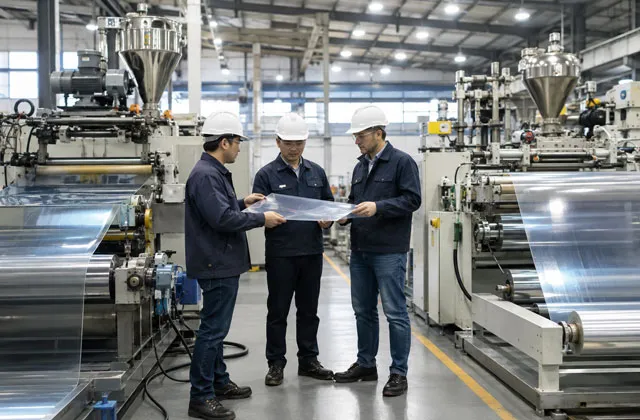
Temperature and venting affect a masterbatch extruder by determining whether the formulation melts uniformly without excessive degradation, moisture or trapped volatiles.
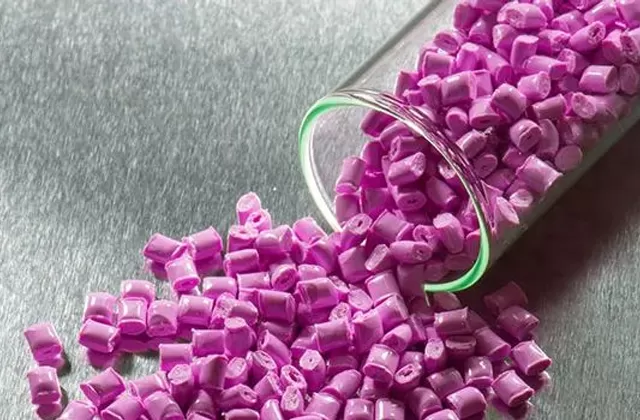
Several attributes matter. Pellet size should be relatively uniform so the material feeds and doses consistently. Pellet surface should be clean rather than excessively dusty or smeared. Mechanical integrity should be sufficient to avoid breakdown during packaging and transport. Most importantly, the pellet should release color consistently in the customer’s process without undispersed specks or unexpected pressure rise.
Pelletizing method can influence this. Strand pelletizing is common and versatile. Underwater or water-ring systems may be selected in other formulations based on melt behavior and required pellet character. The right method depends on viscosity, production rate, and quality expectations. Packaging conditions also matter. Even a good pellet can absorb moisture or become contaminated if post-extrusion handling is poorly controlled.
Quality testing often includes visual evaluation, color measurement, dispersion testing, bulk density or pellet-size checks, ash or filler analysis where relevant, and trial let-down in a representative downstream process. A supplier who understands masterbatch production should discuss at least some of these tests during project planning.
Pellet quality from a masterbatch extruder is defined by dispersion, color consistency, pellet size, dust level, moisture and predictable downstream dosing.
Start by reviewing application scope. Has the supplier built lines for color masterbatch specifically, or mainly for general compounding? Ask about formulations, pigment-loading ranges, feeder configuration, venting design, and pelletizing options. A strong supplier should explain which parts of the line are standardized and which are customized according to pigment type and carrier system.
Next, review testing and scale-up. If a supplier can support trials, request a clear plan that defines input materials, target throughput, expected dispersion standard, and key performance indicators. Stable operation over a meaningful period is more useful than a short visual demonstration. In many projects, buyers should look for at least several hours of consistent running after the process has stabilized.
Then assess support capability. JWELL is active in multiple extrusion and compounding sectors, and that brand presence matters when a buyer needs integrated engineering rather than isolated equipment supply. For a masterbatch project, buyers should still ask detailed questions: What screw configurations are recommended for black, white, or color systems? How are feeders selected? What wear protection is offered? What data are available for similar lines?
Finally, look at total business fit. A good supplier is not only one that sells a plastic extrusion factory story. It is one that can turn formulation logic into repeatable plant performance and support startup, spare parts, and troubleshooting after delivery.
Different formulations change masterbatch extruder design because black, white, color and specialty masterbatches require different feeding, shear, wear protection and pelletizing conditions.
Black masterbatch often emphasizes carbon black dispersion and may require strong agglomerate breakdown while controlling dust and maintaining throughput. White masterbatch frequently relies on titanium dioxide and can create high-loading conditions where feeding accuracy and thermal control are important. General color masterbatch may involve organic or inorganic pigments with very different sensitivity to heat and shear. Specialty systems may also include fluorescent pigments, metallic effects, or additive combinations that narrow the acceptable process window.
These differences affect screw design, side-feeder arrangement, barrel wear strategy, and pelletizing choice. A line that performs well on one product family may not be the best option for another if the configuration is not adapted. This is why the phrase compounding twin screw extruder should never be treated as a complete technical answer by itself. The real answer lies in how the line is configured for the intended masterbatch category.
For buyers, the practical lesson is to tell the supplier what kind of masterbatch portfolio is planned. A plant producing mainly large-volume black and white products should be evaluated differently from a plant focused on many short-run customized color batches.
Wear protection, cleaning, and color changeover affect pellet consistency because contamination and equipment wear can gradually undermine dispersion quality even when the basic process recipe remains the same.
Some pigments and fillers are abrasive. Over time, screws, barrels, kneading elements, and dies can wear, changing shear behavior and dimensional accuracy. Wear may also generate black specks or metal contamination if not managed properly. For this reason, buyers should evaluate wear-resistant materials and component service life when planning a long-running masterbatch operation, especially for abrasive white or mineral-filled systems.
Cleaning and changeover discipline are equally important. In a factory producing many colors, a technically good line can still lose money if purge volume is excessive or if residual pigment causes contamination of the next batch. The line layout, feeder accessibility, barrel cleaning method, and die/pelletizer maintenance all influence how quickly the plant can move from one color to another. In short-run business models, this can have a direct effect on profitability.
A good supplier should therefore discuss not only rated throughput but also wear strategy, spare-parts planning, cleaning access, and realistic color-change procedures. These are practical issues that strongly affect real pellet consistency across months of production, not just during the first acceptance test.
A masterbatch extruder comparison table helps buyers match formulation requirements with screw design, feeding, venting, wear protection and pellet-quality controls.
| Decision Area | What to Check | If Poorly Controlled | What Good Practice Looks Like |
| Pigment dispersion | Agglomerate breakdown and uniformity | Specks, streaks, low tinting strength | Screw design and process set for the specific pigment system |
| Carrier selection | Compatibility with end-use resin | Poor processability, weak properties, haze | Carrier chosen for compatibility and commercial practicality |
| Feeding accuracy | Stable gravimetric dosing and powder flow | Color drift, unstable formulation | Reliable feeders, pre-mix logic where needed, calibration routines |
| Thermal control | Barrel and melt temperature stability | Degradation, poor wetting, color shift | Controlled temperature profile matched to formulation |
| Venting | Removal of air, moisture, volatiles | Bubbles, defects, unstable pellets | Stable venting layout with appropriate vacuum control |
| Pelletizing | Pellet size and shape consistency | Dust, feeding issues, dosing variation | Pelletizing method selected for melt behavior and downstream handling |
| Quality verification | Color and dispersion testing | Inconsistent customer performance | Routine visual, instrumental, and application-based testing |
Selecting the right masterbatch extruder means matching the pigment system, carrier resin, dispersion target, output and pellet-quality standard with a proven process configuration.
Strong masterbatch pellets are not defined only by bright color. They are defined by how consistently they perform in the customer’s process. That requires the right carrier, the right pigment-handling strategy, the right twin-screw process design, and the right quality-verification routine. Buyers should therefore evaluate compounding lines by saleable pellet performance rather than by screw diameter or output headline alone.
For companies planning a new color masterbatch project, JWELL’s value lies in translating application requirements into a suitable compounding line structure. The most useful RFQ information includes pigment type, target carrier, let-down ratio, output target, downstream application, quality standards, preferred pelletizing method, and whether the project emphasizes broad color flexibility or large-volume stable production.
One more point deserves emphasis. In masterbatch manufacturing, the best process is the one that stays repeatable when production moves from trial scale to daily commercial output. A line should therefore be evaluated by how it handles routine operating realities such as feeder refill, pigment lot change, operator shift change, and the need for consistent pellet behavior over extended campaigns.
These masterbatch extruder FAQs summarize the most common questions about dispersion, carrier selection, screw configuration, feeding and pellet-quality control.
1. What is the main difference between pigment distribution and pigment dispersion?
Distribution means the pigment is spread throughout the polymer matrix, while dispersion means the pigment agglomerates are broken down to a sufficiently fine and effective state. A masterbatch can be well distributed but still poorly dispersed, which will reduce final color quality.
2. Why is the carrier resin so important in color masterbatch?
The carrier affects compatibility with the final resin, pigment wetting, processing behavior, and property retention in the end product. A poorly matched carrier can cause process instability, haze, weak mechanical performance, or color inconsistency.
3. Is twin-screw extrusion always used for color masterbatch?
Twin-screw technology is widely preferred because it offers strong mixing flexibility and controlled feeding and venting, but the exact machine configuration still depends on the formulation, output target, and required quality level. The key is not the label alone but the engineering behind it.
4. How can I judge whether a masterbatch pellet is high quality?
Look at color consistency, pellet uniformity, dust level, dispersion performance, filter behavior, and downstream let-down results. High-quality pellets should process consistently and deliver stable color without excessive specks or pressure rise.
5. What causes specks or uneven color in downstream processing?
Common causes include poor pigment dispersion, unstable feeding, incompatible carrier selection, inadequate venting, contamination, and thermal degradation. The root cause should be identified systematically rather than assumed from the pellet appearance alone.
6. What information should I prepare before requesting a masterbatch line quotation?
Prepare the target pigment type, carrier resin, target loading, let-down ratio, final application, required output, pelletizing preference, color-quality expectations, and any known issues such as wear, dust, or frequent color changes. This helps the supplier recommend a realistic process solution.

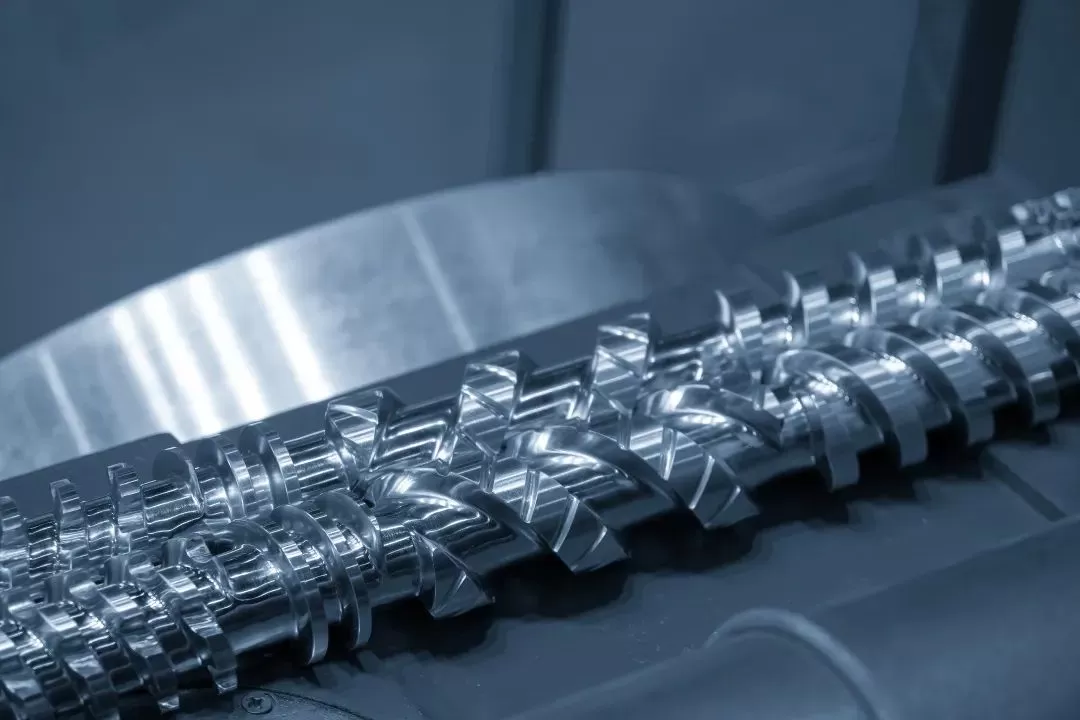
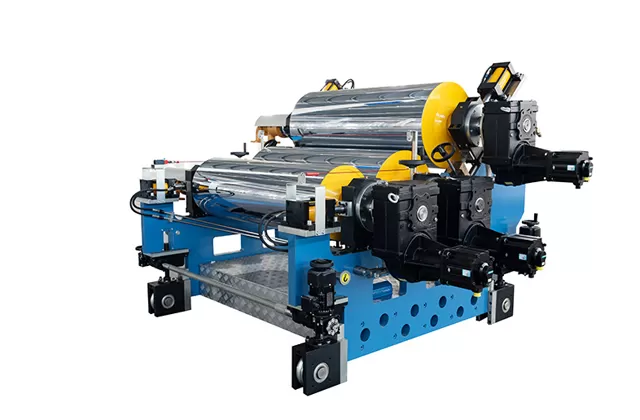
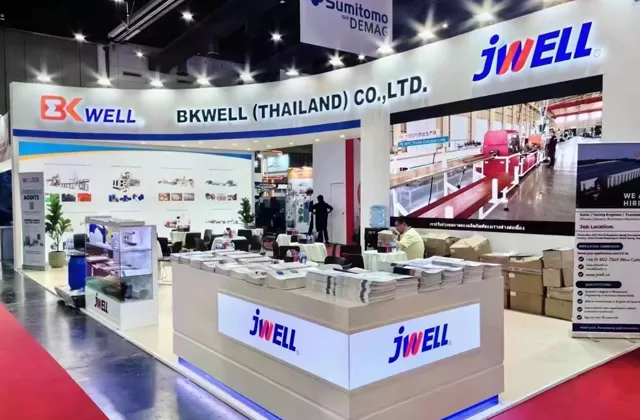
Jwell started manufacturing screws and barrels in 1978, making it one of the earliest screw and barrel manufacturers in China. Its brand, "Jinhailuo", has become well recognized in the industry. In 1997, Jwell was established to begin the production of extrusion machinery. Today, Jwell is the vice president unit of the China Plastics Machinery Industry Association and one of the technology leaders in the extrusion machinery industry.