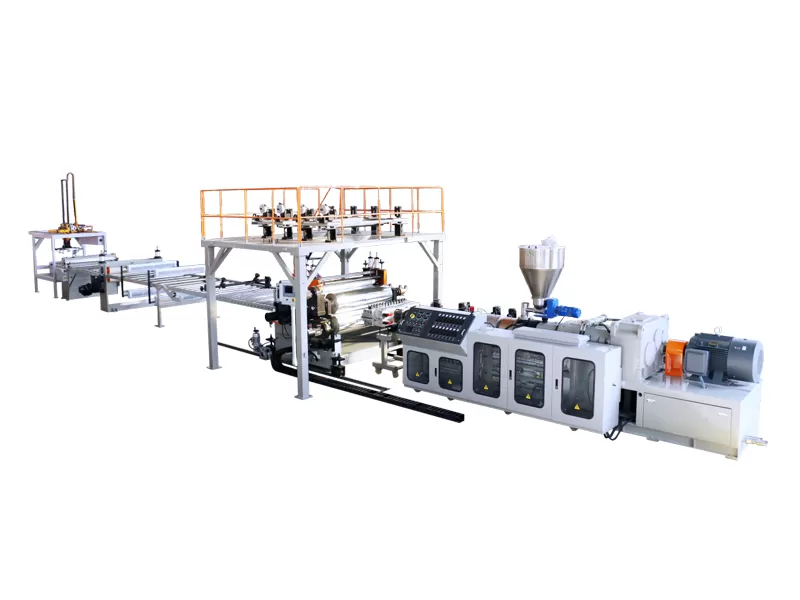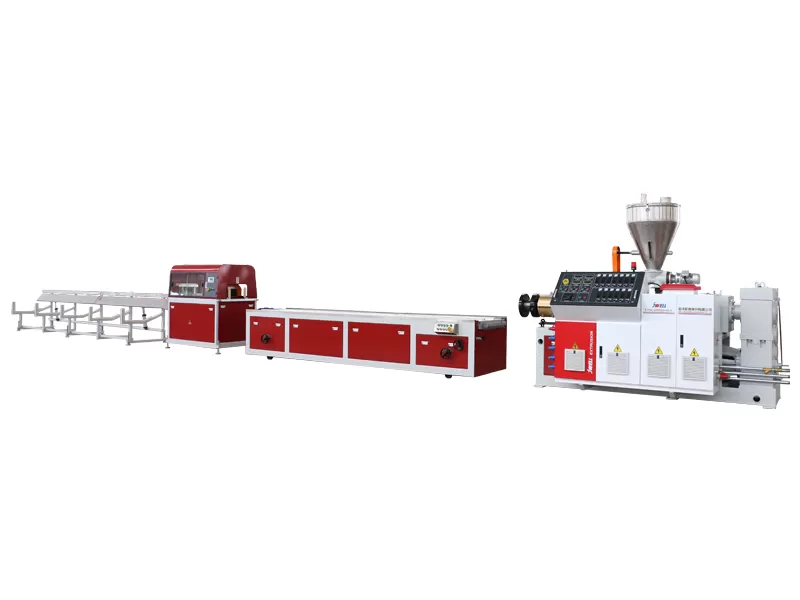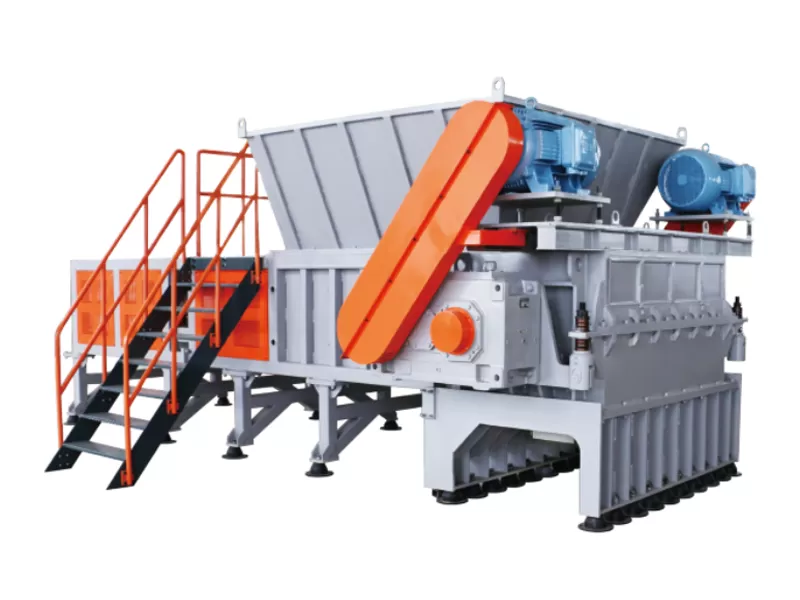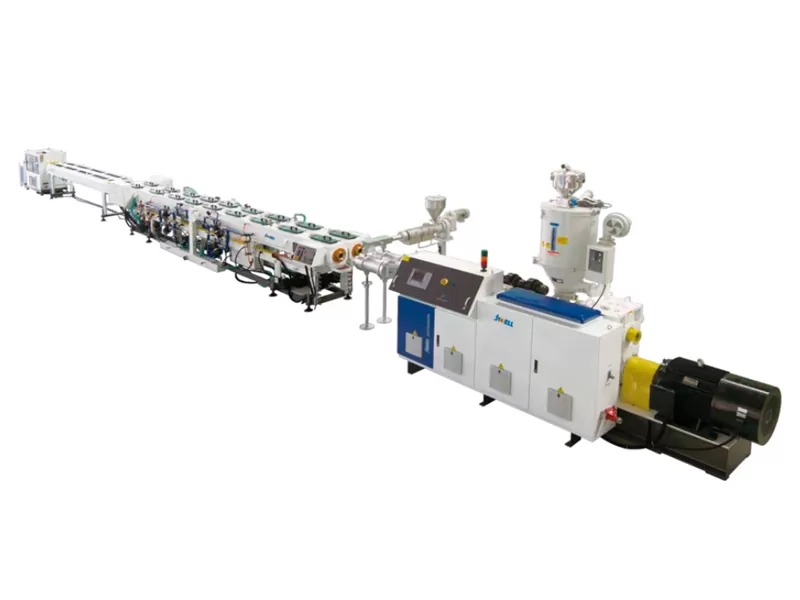
A plastic extrusion project succeeds when the machine is selected around the product, material, process window, and business model rather than around a headline output number. Buyers often begin by asking for an extruder size or price, but a complete production line includes feeding, plasticizing, filtration, die forming, calibration or cooling, traction, cutting or winding, controls, material handling, and quality verification. A mismatch in any one of these sections can reduce stable output even when the main extruder is powerful enough.
This guide explains how to turn a product requirement into a practical equipment specification. It is written for manufacturers evaluating a new line, replacing an older line, adding capacity, localizing production, or processing a new resin. The goal is not to recommend one universal configuration. It is to show which technical questions control line selection, how competing proposals should be compared, and what evidence should be requested before an order is approved.
JWELL reports that its extrusion machinery business was established in 1997 and that the group now operates eight large production bases covering more than 700,000 square meters, with more than 3,000 employees and engineering teams supporting overseas projects. Those numbers are relevant only when they translate into measurable project capabilities: screw and barrel manufacturing, metal processing, assembly control, trial production, documentation, commissioning, training, and spare-parts support. A buyer should verify these capabilities during supplier evaluation rather than relying on brand statements alone.
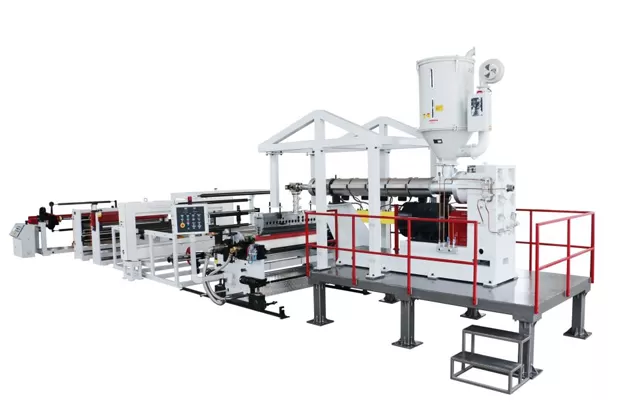
A plastic extrusion machine is a continuous processing system that melts or softens a polymer, conveys it under controlled pressure, shapes it through a die, and stabilizes the resulting profile, pipe, sheet, film, pellet, or other product through downstream equipment.
The word “extruder” sometimes refers only to the drive, gearbox, screw, barrel, heaters, cooling zones, and control system. In commercial purchasing, however, the useful unit of comparison is normally the complete line. A pipe extruder without a correctly sized die head, vacuum calibration tank, haul-off, cutter, and material handling system cannot produce saleable pipe. A sheet extruder without stable melt filtration, a suitable die, calibrated roll stack, edge trimming, and winding or stacking equipment cannot maintain thickness and surface quality. A compounding extruder without accurate feeders, venting, filtration, and pelletizing equipment cannot deliver consistent pellets.
For this reason, buyers comparing plastic extrusion equipment should separate the proposal into process sections and verify how each section supports the finished-product specification.
Plastic extrusion machine selection should start with the finished product because product geometry, dimensions, tolerances, surface requirements, application standards, and expected production volume determine the necessary process and equipment.
The same polymer can require very different machinery. HDPE may be used for a pressure pipe, a geomembrane sheet, a hollow board, a blow-molded container, or a recycled pellet. Each product has different melt-flow requirements, die geometry, cooling behavior, dimensional controls, and downstream systems. Even within one category, a small-diameter irrigation pipe, a large-diameter water pipe, and a multilayer gas pipe should not be treated as interchangeable projects.
Before discussing screw diameter, motor power, or line speed, define the following:
Final product type and application.
Cross-section drawing, width, diameter, wall thickness, or film gauge.
Material grade, melt flow rate, bulk density, moisture sensitivity, fillers, fibers, pigments, and recycled content.
Single-layer or multilayer structure and the thickness ratio of each layer.
Required dimensional tolerance, surface quality, optical quality, mechanical properties, and test standard.
Target net output in kilograms per hour and annual saleable production.
Planned operating schedule, changeover frequency, batch size, and number of product specifications.
Local power supply, cooling-water conditions, compressed air, plant layout, lifting limits, and environmental conditions.
A strong supplier should challenge incomplete assumptions. If a proposed line is based only on the words “500 kg/h PET sheet” or “high-speed PVC pipe,” the quotation is not yet an engineering proposal.
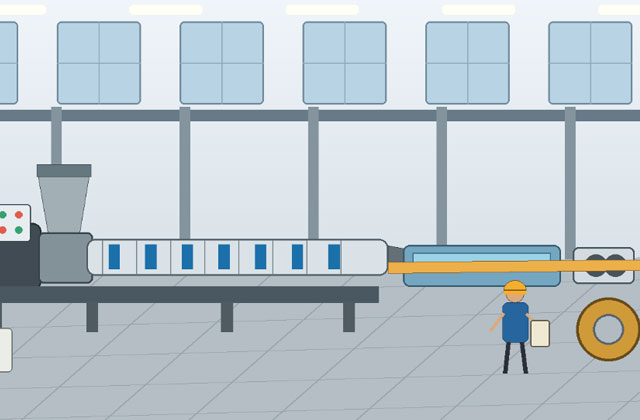
Material properties affect plastic extrusion machine design because polymers differ in thermal stability, viscosity, moisture sensitivity, shear response, corrosiveness, abrasiveness, and compatibility with fillers or additives.
PE and PP are generally processed over a relatively broad window, but their output and melt quality still depend on grade, melt flow rate, recycled content, and product geometry. PVC is heat-sensitive and requires careful control of residence time, shear, temperature, and stabilizer formulation. PET is moisture-sensitive; hydrolytic degradation can reduce molecular weight if drying or venting is inadequate. Engineering polymers such as PEEK, PPS, PEI, PA, and PVDF may require higher processing temperatures, corrosion-resistant surfaces, controlled drying, and specialized downstream equipment. Highly filled compounds increase torque and wear, while glass fibers can accelerate abrasion and affect die design.
The material specification should therefore include more than a polymer name. Provide the exact grade or a representative technical data sheet, target additive package, percentage of regrind, filler loading, bulk density, moisture requirement, and whether formulations will change. When the formulation is confidential, a supplier can still evaluate a representative recipe under a nondisclosure agreement or work with defined processing properties.
Single-screw, twin-screw, and specialty extruders differ mainly in conveying mechanism, mixing intensity, venting capability, torque characteristics, and suitability for stable extrusion versus formulation-intensive compounding.
| Extruder Type | Typical Strengths | Common Applications | Key Risks if Misapplied |
|---|---|---|---|
| Single-screw extruder | Stable continuous conveying, comparatively simple operation, efficient processing of consistent thermoplastic feed | PE/PP pipe, film, sheet, profile, coating, recycling pelletizing | Insufficient dispersive mixing for difficult formulations; output may fluctuate with low-bulk-density feed |
| Parallel co-rotating twin-screw extruder | High mixing flexibility, modular screw elements, multiple feeding and venting positions | Masterbatch, filler compounds, engineering plastics, reactive extrusion, devolatilization | Excessive shear or residence time if screw configuration and speed are not matched to material |
| Conical counter-rotating twin-screw extruder | Positive conveying at lower speed, useful pressure generation and controlled processing | PVC profiles, pipes, panels, pelletizing | Wear, thermal degradation, or poor fusion if formulation and screw design are mismatched |
| Parallel counter-rotating twin-screw extruder | Controlled conveying and mixing for heat-sensitive formulations | Rigid PVC products and selected profile or pipe applications | Higher project complexity; configuration must reflect formulation and output |
| Two-stage or tandem system | Separates intensive mixing from pressure building or cooling | Heat-sensitive compounds, recycling, high-filler formulations, devolatilization | Unnecessary capital and maintenance if a single stage can meet the process need |
The table is a starting point, not a purchasing rule. A well-designed single-screw line can outperform a poorly specified twin-screw line in a stable pipe or film application. A twin-screw system can be essential when multiple powders, fibers, liquids, pigments, or reactive components must be dispersed and devolatilized. The correct choice depends on the process task.
Output should be defined as stable saleable production at an agreed product specification, not as the maximum kilograms per hour the extruder can discharge under an easy test condition.
Three numbers should be separated: gross melt output, downstream-limited output, and net good-product output. A line may extrude 600 kg/h of melt, but if cooling, calibration, winding, trimming, dimensional control, or changeovers limit saleable production to 480 kg/h, the business should be modeled around the lower number. The same distinction applies to a line that can briefly reach a high speed but cannot maintain thickness, surface, or dimensional tolerances for an extended run.
Calculate annual capacity using realistic uptime:
Annual saleable output = net stable output × scheduled hours × operating availability × first-pass yield.
For example, a line running at 500 kg/h for 7,200 scheduled hours, with 85% operating availability and 97% first-pass yield, produces approximately 2,968 metric tonnes of saleable product per year. If a supplier quotes only 500 kg/h and ignores availability and yield, the financial model may overstate annual production by more than 600 tonnes.
Oversizing also has costs. A large extruder may run inefficiently at low throughput, increase residence time during small orders, require more heating and cooling, create longer changeovers, and raise capital expenditure. The preferred operating window should match the normal production mix, not the rare maximum order.
Complete plastic extrusion equipment includes every machine and control function required to move from prepared raw material to a stable, inspected, and handled finished product.
A practical line breakdown is:
Raw-material handling: bag unloading, silo, vacuum conveying, drying, crystallizing, blending, dosing, and metal separation.
Feeding: volumetric or gravimetric feeders, side feeders, liquid dosing, loss-in-weight control, and refill logic.
Extrusion: drive, gearbox, screw, barrel, heaters, barrel cooling, venting, vacuum, pressure measurement, and melt-temperature measurement.
Filtration and melt transfer: screen changer, melt pump, static mixer, adapters, and pressure protection.
Die and forming: pipe head, profile die, flat die, annular die, strand die, or application-specific tooling.
Cooling and calibration: vacuum tanks, spray tanks, roll stacks, chill rolls, water baths, air cooling, calibrators, and temperature-control units.
Haul-off and finishing: traction, cutting, coiling, winding, stacking, trimming, embossing, lamination, surface treatment, or pelletizing.
Controls and data: PLC, HMI, drive synchronization, recipe management, alarms, trend recording, energy metering, and remote diagnostics.
Quality inspection: thickness gauge, diameter measurement, weight control, spark testing, camera inspection, laboratory instruments, and sample-retention procedures.
Utilities and safety: water system, chiller, compressed air, dust collection, guarding, interlocks, emergency stops, access platforms, and exhaust handling.
Ask suppliers to mark which items are included, optional, supplied by others, or required from the buyer. A low initial quotation can become expensive when essential auxiliaries, tooling, installation materials, commissioning consumables, or quality instruments are excluded.
Screw design influences melt quality and energy use by controlling solids conveying, compression, melting, mixing, pressure generation, residence time, and the stability of output under changing conditions.
There is no single “high-output screw” that is optimal for every resin. Channel depth, compression profile, barrier sections, mixing elements, venting position, screw speed, surface treatment, and barrel cooling must match the polymer and product. For filled or recycled materials, feeding behavior and wear resistance may be as important as nominal screw diameter. For heat-sensitive materials, excessive shear or stagnant zones can create discoloration and degradation. For optical sheet or film, unmelted particles and thermal nonuniformity can create gels, streaks, or thickness variation.
Request the design basis rather than proprietary dimensions. The supplier should explain the target material, normal output window, maximum screw speed, installed motor, specific torque where relevant, expected melt temperature, venting strategy, wear-protection option, and cleaning or changeover method. If multiple materials will be processed, ask whether one screw design can cover them without unacceptable compromise.
Downstream equipment determines real line performance because the extruded melt must be shaped, cooled, stabilized, transported, and finished without introducing dimensional or surface defects.
In pipe extrusion, insufficient vacuum calibration or cooling length can limit speed even when extruder capacity remains available. In profile extrusion, the calibrator and haul-off must control a complex cross-section without distortion. In sheet extrusion, roll temperature, roll rigidity, nip control, die uniformity, and web tension influence thickness and surface. In film production, cooling, orientation, edge control, winding tension, and thickness measurement can become the bottleneck. In pelletizing, cutter type, melt filtration, water temperature, drying, and pellet transport affect pellet shape and fines.
Compare downstream capacity at the same product specification. A supplier may list a maximum haul-off speed or winding width that does not correspond to the quoted thickness, diameter, or output. Ask for a process balance showing how every section supports the guaranteed operating point.
Automation improves repeatability when it coordinates material feeding, temperature, pressure, line speed, cooling, traction, cutting or winding, alarms, and recipe settings around a controlled process window.
Automation should not be judged only by the PLC brand. Evaluate what is measured, what is controlled, how data is stored, and how operators respond to deviations. Useful functions can include gravimetric throughput control, automatic die adjustment, line-speed synchronization, roll-gap control, recipe access levels, trend charts, alarm histories, energy monitoring, preventive-maintenance prompts, remote service, and batch reports.
Data access matters for quality and troubleshooting. Ask how long trends are stored, whether data can be exported, which variables are recorded, whether user permissions are configurable, and how software backups are managed. If the plant uses MES or ERP systems, define required communication protocols during the quotation stage rather than after the machine arrives.
Energy consumption should be compared as specific energy at an agreed stable output and product condition, not by installed motor power or a single no-load reading.
The most useful metric is kilowatt-hours per kilogram of saleable product. The test boundary must be defined: does it include only the extruder drive, or also heaters, vacuum pumps, chillers, dryers, conveyors, haul-off, cutters, winders, and compressed air? Two suppliers can report very different numbers simply because they use different boundaries.
Use the same resin, product dimensions, output, utility temperature, and measurement period. Record gross power, net output, scrap generated during the test, and whether the line was already thermally stable. For a plant that operates 7,000 hours per year, a difference of 0.05 kWh/kg at 500 kg/h equals 175,000 kWh annually. The financial value depends on the local electricity tariff, but the calculation shows why test conditions must be explicit.
An extruder machine manufacturer should be evaluated by its ability to convert a product requirement into a tested process, manufacture critical components consistently, integrate the complete line, document performance, and support the equipment throughout its life.
When comparing plastic extrusion machine manufacturers, review evidence in six areas:
Application engineering: Can the supplier explain material behavior, process risks, line balance, and acceptance criteria?
Manufacturing control: Which screws, barrels, gearboxes, dies, rollers, frames, controls, and auxiliaries are made internally or sourced? How are critical tolerances inspected?
Trial capability: Can representative material and tooling be tested before shipment? Is a documented FAT available?
Project management: Are layout, utility requirements, foundation loads, cable lists, spare parts, manuals, and shipping responsibilities clearly scheduled?
Commissioning and training: Who will install, start, optimize, and train operators? What is excluded?
Lifecycle support: Are remote diagnostics, software backups, replacement parts, wear-part drawings, and service response procedures defined?
JWELL’s company profile states that it operates multiple production bases, metal-processing plants, screw and barrel manufacturing resources, and overseas engineering support. A buyer should connect these claims to the specific line being purchased: where it will be built, which team owns the project, where the trial will occur, and who will provide post-sale support.
A plastic extrusion machine RFQ should give suppliers enough technical and commercial information to propose a line that can be compared on the same basis.
| RFQ Section | Information to Provide | Why It Matters |
|---|---|---|
| Product | Drawing, dimensions, tolerances, weight, surface, application, standards, sample | Defines die, downstream equipment, quality controls, and acceptance |
| Material | Exact grade, formulation, moisture, filler, regrind, additives, MFI/MFR, bulk density | Controls screw, feeding, venting, filtration, wear protection, and temperature |
| Production | Normal and maximum output, annual volume, shifts, product mix, changeover frequency | Prevents oversizing and supports capacity calculations |
| Utilities | Voltage, frequency, cooling water, ambient conditions, compressed air, extraction | Affects motors, controls, heating, cooling, and site preparation |
| Automation | Recipe control, data storage, remote service, MES connection, language | Defines controls scope and future integration |
| Commercial | Delivery location, Incoterm, installation scope, trial material, training, warranty | Prevents hidden cost and responsibility gaps |
| Acceptance | Test material, dimensions, output, run duration, energy boundary, quality tests | Converts marketing claims into measurable obligations |
Send the same RFQ to each shortlisted supplier. If suppliers make different assumptions, list them in a deviation table. A proposal that clearly states limits and exceptions can be safer than a lower quotation that accepts every target without a technical explanation.
Plastic extrusion machine proposals should be compared through a normalized matrix that separates guaranteed performance, included scope, operating cost, technical risk, and lifecycle support.
Do not score every item equally. Product quality and stable output are normally more important than cosmetic machine differences. A practical weighted evaluation might assign 25% to process and performance, 20% to complete scope, 15% to quality and acceptance, 15% to supplier capability, 15% to lifecycle cost, and 10% to schedule and commercial terms. The exact weights should reflect the project.
Normalize the following:
Guaranteed net output at the same product and material.
Included auxiliaries, tooling, inspection systems, utilities, installation materials, and spare parts.
Number and type of feeders, vents, screen changers, pumps, gauges, and controls.
Motor and heater ratings, but also specific-energy test method.
Changeover method, cleaning time, scrap during startup, and recipe flexibility.
FAT duration, trial material responsibility, measurement equipment, and pass/fail criteria.
Installation, commissioning, training, travel, accommodation, visas, and local labor.
Warranty conditions, exclusions, response process, software support, and wear-parts availability.
Total cost of ownership is the lifecycle cost of acquiring, operating, maintaining, and supporting a plastic extrusion line while accounting for saleable output, quality losses, and downtime.
A useful model includes purchase price, freight, duties, foundation and utilities, installation, startup material, energy, labor, planned maintenance, wear parts, unplanned downtime, scrap, changeover losses, financing, and residual value. The largest cost difference is not always the initial price. A line that produces more saleable output with lower scrap and faster changeovers can create a better return even at a higher capital cost.
Consider a simple downtime example. A 500 kg/h line with a contribution margin of US$0.30 per kilogram loses US$150 of contribution for each production hour that it is unavailable, before considering labor and delivery penalties. Reducing unplanned downtime by 200 hours per year is worth US$30,000 in contribution. This calculation makes service response, preventive maintenance, and spare-parts planning commercially measurable.
Ask each extruder machine manufacturer for recommended annual wear parts, preventive-maintenance intervals, expected service life of critical components under the proposed material, and the cost of a two-year operating spares package.
Factory acceptance testing is a documented trial that verifies whether the line meets agreed safety, function, output, quality, and documentation requirements before shipment.
The FAT should include mechanical and electrical inspections, safety interlocks, dry running, heating and cooling functions, feeder calibration, alarm tests, drive synchronization, recipe operation, data recording, and a loaded production run. The loaded test should specify the exact material, product, tooling, stable output, dimensions, tolerances, line speed, scrap definition, run duration, and measurement method.
Do not rely on a short demonstration after the line has already been optimized for hours. Agree how startup time is handled and when the stability test begins. Retain samples from the beginning, middle, and end of the run. Record process trends and quality results. If the final site uses different utilities or raw material, document the expected impact and the commissioning plan.
JWELL should appear in a buyer’s decision process as a technical line integrator whose proposal can be verified through process logic, manufacturing resources, trial evidence, project documentation, and support commitments.
The brand should not be inserted as a generic claim after every section. It is more useful where the buyer needs evidence. JWELL can explain which production base will build the machine, which engineering team owns the project, how screws and barrels are selected, what trial conditions are available, which downstream sections are produced or integrated, and how overseas installation will be organized. Published company information states that JWELL began its extrusion machinery business in 1997, operates eight large bases covering more than 700,000 square meters, and employs more than 3,000 people. The project team should confirm which of those resources directly support the quoted line.
A technically strong proposal should also identify uncertainty. If the product is new, the resin is unusual, or the target tolerance has not been demonstrated, JWELL and the buyer should define a development trial, sample validation, or staged acceptance plan rather than presenting an untested number as guaranteed.
The cost depends on the product, material, output, screw design, tooling, downstream equipment, automation, quality-control systems, and installation scope. A main extruder price is not comparable to a complete line price. Buyers should request an itemized scope and compare total installed cost, energy, scrap, maintenance, and expected saleable output rather than choosing the lowest quotation.
The most important specification is stable saleable output at the required product quality. Screw diameter, motor power, line speed, and maximum kg/h are supporting variables. The proposal should guarantee performance using an agreed material, product dimension, tolerance, run duration, and test method.
Choose a single-screw extruder for many stable continuous extrusion applications using a consistent thermoplastic feed. Choose a twin-screw extruder when intensive mixing, multiple feeders, devolatilization, filler dispersion, reactive processing, or formulation flexibility is central to the process. PVC applications may use conical or parallel counter-rotating twin-screw designs. A material trial is advisable when the process is uncertain.
Define a factory acceptance test using the intended resin or an agreed equivalent, the target product dimensions, required tolerances, and a stable run period. Measure net good output, not only gross material consumption. Record line speed, product weight, scrap, process trends, energy boundary, and quality results.
Send the product drawing or sample, material grade and formulation, target dimensions and tolerances, layer structure, required output, annual volume, product mix, utilities, automation needs, plant layout, delivery location, and desired installation scope. Better input data allows JWELL to propose a more accurate line and acceptance plan.
Service life depends on operating hours, material abrasiveness or corrosiveness, screw and barrel metallurgy, maintenance quality, alignment, temperature control, cleaning, and spare-parts support. The line frame and major mechanical systems may remain useful for many years, while screws, barrels, cutters, seals, heaters, sensors, and wear surfaces require periodic replacement. Ask for maintenance intervals and wear-part expectations for the actual formulation.
A plastic extrusion machine should be purchased as a balanced production system, not as a collection of headline specifications. Start with the finished product and material. Define normal output, annual saleable capacity, quality requirements, utilities, automation, changeovers, and acceptance conditions. Then compare extruder design, downstream capacity, complete scope, manufacturing evidence, energy test methods, service, and total cost of ownership on the same basis.
JWELL can support a project more effectively when the buyer provides a clear product drawing, resin and formulation data, output target, quality standard, and site conditions. The result should be a documented line proposal with a process basis, scope boundary, FAT plan, installation responsibilities, and lifecycle support strategy. That level of detail reduces procurement risk and creates a stronger foundation for stable production after commissioning.
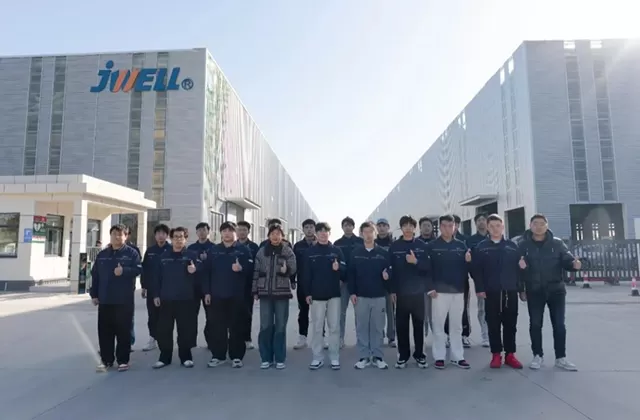

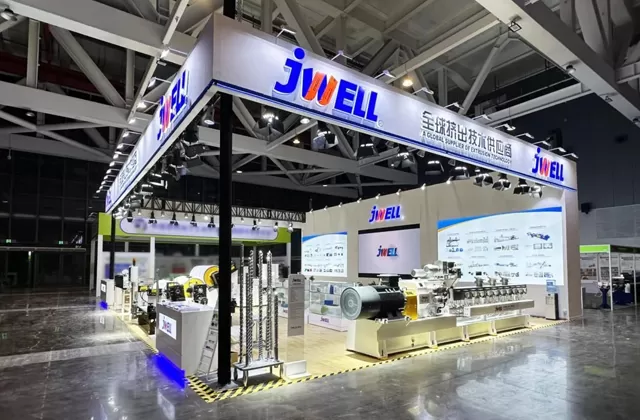
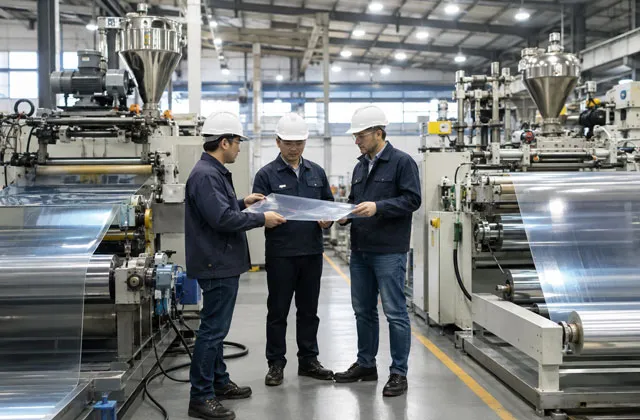
Jwell started manufacturing screws and barrels in 1978, making it one of the earliest screw and barrel manufacturers in China. Its brand, "Jinhailuo", has become well recognized in the industry. In 1997, Jwell was established as a plastic extrusion machinery manufacturer and began the production of extrusion machinery. Today, Jwell is the vice president unit of the China Plastics Machinery Industry Association and one of the technology leaders in the extrusion machinery industry.