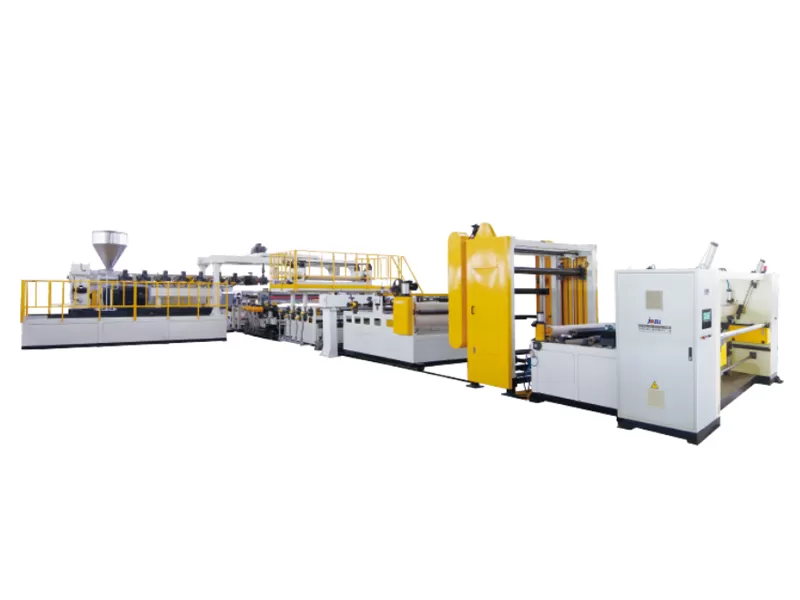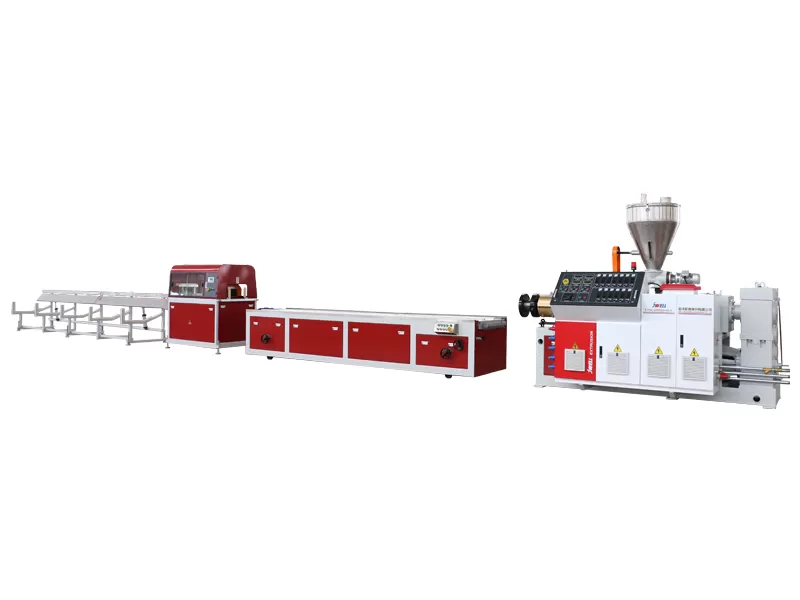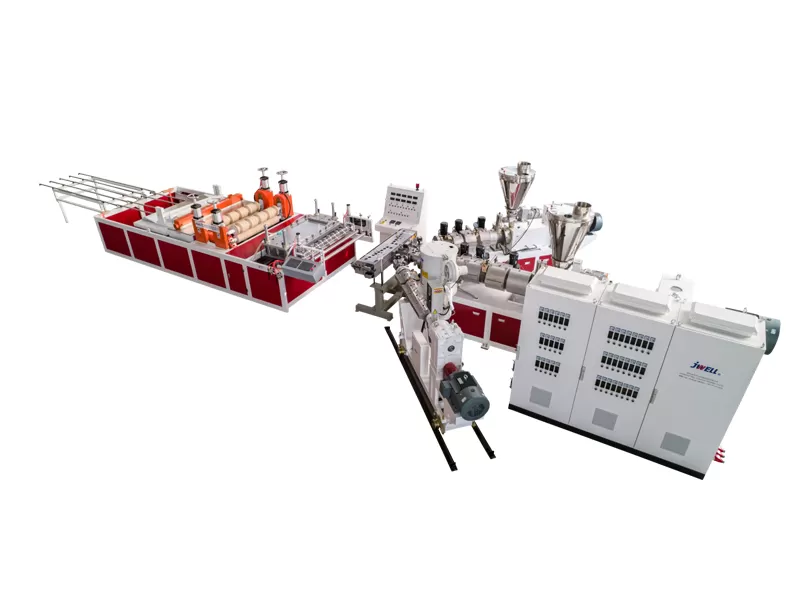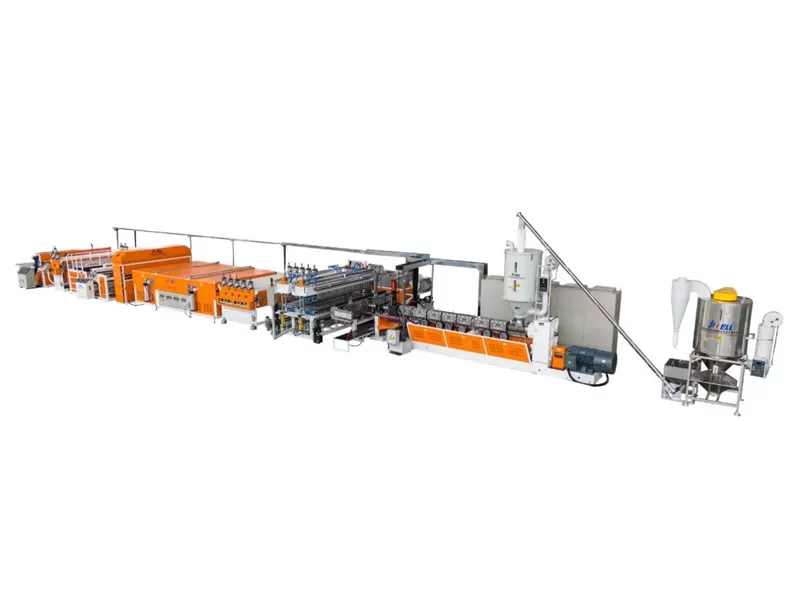
PET sheet buyers are usually not choosing between two abstract machine concepts. They are deciding how to turn a defined resin system, a target sheet specification, and a planned production volume into a line that runs stably for years. That is why the comparison between single-screw and twin-screw PET sheet extrusion matters. The question is not which technology sounds more advanced. The real question is which process layout delivers the required clarity, thickness consistency, output stability, and operating economy for your plant.
In the packaging, thermoforming, stationery, electronics, and food-service sectors, PET sheet remains one of the most important thermoplastic sheet materials because it combines transparency, stiffness, good forming performance, and wide recyclability. At the same time, PET is also a moisture-sensitive polyester, which means poor drying, unstable melt conditions, and weak process control can quickly lead to IV loss, haze, gels, black specks, and sheet variation. A buyer therefore needs to evaluate the entire extrusion route rather than only the nameplate capacity of the extruder.
This guide explains how single-screw and twin-screw PET sheet systems differ, where each design performs best, what production numbers matter, and how to choose a supplier with enough engineering depth. The article also includes a comparison table, practical FAQ answers, and selection criteria relevant to companies evaluating a new PET sheet project or expanding existing capacity.
PET sheet extrusion is the continuous process of converting dried polyethylene terephthalate resin into a flat sheet through melting, filtering, pumping or metering, die forming, polishing, cooling, trimming, and winding or cutting.
Commercial PET sheet lines normally process APET, PETG, CPET, or recycled PET-containing formulations, depending on the end application. Finished sheet can later be thermoformed into trays, cups, lids, clamshells, blister packaging, medical packaging, stationery covers, or industrial sheets. Typical sheet thickness ranges from about 0.15 mm to 1.5 mm in many packaging lines, while industrial applications may go thicker. Typical widths range from several hundred millimeters to over 1,200 mm, depending on downstream use and line design.
The main production challenge is that PET is not forgiving when water is present. Many processors aim for resin moisture below roughly 50 ppm before extrusion, and some operations target even lower values when the product has high transparency or strict forming requirements. Once the resin is dry, the line must melt it evenly, minimize residence-time damage, remove contamination and volatiles, form a smooth curtain from the die, and cool it in a controlled way through the roll stack.
The single-screw versus twin-screw decision is a process-selection decision because the extruder affects drying sensitivity, mixing capability, venting behavior, throughput flexibility, raw-material tolerance, and final sheet consistency.
Many buyers first encounter the choice when they compare equipment quotations. One supplier recommends a traditional dried-PET single-screw sheet line. Another suggests a twin screw extruder manufacturer route, often emphasizing compounding flexibility or recycled-content performance. Both can be valid, but they are not interchangeable in every scenario.
A single-screw line is often preferred when the formulation is relatively stable, the resin preparation system is reliable, and the project prioritizes a simpler melt path with a proven sheet-making layout. A twin-screw line is often considered when the material system is more complex, when higher recycled-content ratios are planned, when devolatilization is critical, or when better distributive and dispersive mixing is needed for additives and modifiers.
From a financial perspective, the comparison also affects capital cost, floor-space planning, utility load, operator training, spare-parts strategy, and changeover time. Even a 3% to 5% difference in usable output, scrap rate, or energy consumption can materially change annual operating cost when a line runs multiple shifts across 300+ production days per year.
A single-screw PET sheet extrusion line is a sheet-making system in which one rotating screw performs conveying, melting, pressurizing, and homogenizing before the melt passes through the filtration and die section.
In a typical configuration, PET resin is crystallized and dried first, then fed into the extruder. The screw gradually conveys and melts the resin, using a feed section, compression section, and metering section. From there, the melt usually passes through a screen changer, a melt pump in some configurations, and finally a flat T-die. The sheet then enters a three-roll stack or polishing roll section, where thickness and surface quality are stabilized before trimming and winding.
For many processors, the appeal of the single-screw route is its process familiarity. It is a well-established solution for PET sheet production, especially when raw materials are consistent and drying is well controlled. Single-screw layouts can be engineered for strong output and high line speed, and they are widely accepted in packaging-oriented applications. On many medium and large lines, practical throughput may range from roughly 300 kg/h to over 1,000 kg/h, depending on screw diameter, L/D ratio, resin type, sheet dimensions, and downstream limitations.
The main condition is that upstream preparation must be disciplined. If moisture control, contamination control, or recycled-flake consistency is weak, a single-screw line can still run, but the burden shifts to the rest of the system, and defects may show up more quickly.
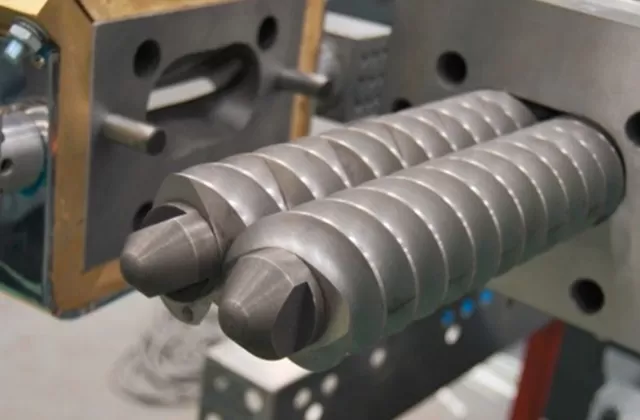
A twin-screw PET sheet extrusion line is a process system in which two intermeshing screws provide stronger mixing, more controlled shear, and greater venting flexibility before the melt enters the sheet-forming section.
In PET sheet projects, twin-screw systems are often associated with APET/PETG/CPET/RPET production because they can provide better mixing and devolatilization in formulations that include recycled content, regrind, additives, or chain extenders. Depending on the exact line design, the twin-screw extruder may feed directly into the die section or into a second stage optimized for pressure stability. The detailed arrangement varies by supplier.
The strength of the twin-screw concept is not simply “more screws.” It is the ability to tailor screw elements, kneading blocks, venting ports, feeding locations, and shear profile to the behavior of the material. This can help when the formulation requires better homogenization, when recycled feedstock introduces variability, or when additives need more controlled incorporation. Good venting design can also improve removal of residual moisture and volatiles, though it does not eliminate the need for disciplined material preparation.
Because the system is more process-configurable, it can also be more engineering-intensive. Buyers should therefore evaluate not only theoretical advantages but also the supplier’s real experience in PET sheet screw design, vacuum stability, melt filtration, and downstream roll-stack matching.
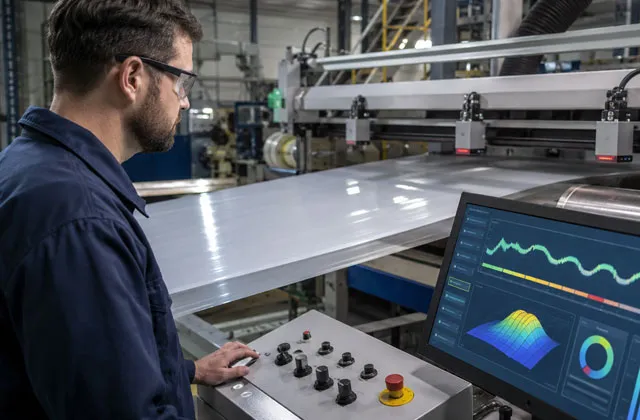
Material preparation is the gatekeeping stage of PET sheet production because drying quality strongly influences intrinsic viscosity retention, optical clarity, odor, gel risk, and sheet-forming stability.
For virgin PET, many plants use a combination of crystallization and dehumidifying drying. Common drying temperatures are often in the range of 150°C to 180°C, while residence time may be around 4 to 6 hours, depending on resin grade and dryer design. These are not universal constants, but they reflect the operational discipline needed to process PET well. If resin enters the extruder with excessive moisture, hydrolytic degradation can occur, reducing molecular weight and affecting final mechanical properties.
For recycled PET or blended formulations, preparation becomes more complex. Flake cleanliness, bulk-density variation, dust, labels, and residual contamination can affect feeding consistency and filter load. In these cases, buyers should look closely at how the line handles pre-treatment, metal separation, filtration stages, and vacuum degassing. A line that looks productive on paper may underperform in the factory if material variability was underestimated during equipment selection.
This is one reason buyers exploring a plastic sheet extrusion machine should ask for process recommendations based on their exact resin system rather than relying on a generic output chart. In PET sheet production, upstream preparation and downstream sheet quality are tightly connected.
Output and operating cost comparison is the practical buying stage because it translates machine design into kilograms per hour, kilowatt-hours per kilogram, labor efficiency, and scrap exposure.
Single-screw PET sheet systems are often appreciated for production stability and straightforward operation when the raw material is consistent. In well-matched configurations, they can deliver competitive throughput with relatively simple operation. Twin-screw systems, however, may create value where formulation flexibility, recycled-content handling, or mixing quality offset added process complexity. Therefore, buyers should not compare only installed motor power. They should compare usable saleable output.
For example, suppose two candidate lines are both quoted around 800 kg/h. If one line reaches that figure only on optimized virgin resin and the other sustains comparable saleable output on a more variable recycled-content blend with lower defect rates, the real operating economics can differ significantly. A processor running 20 hours per day for 330 days would theoretically process 5,280 tonnes per year at 800 kg/h. If scrap falls from 6% to 3%, usable product increases by roughly 158 tonnes annually. That difference alone may justify deeper technical evaluation.
Energy consumption should also be assessed in context. A line drawing more power per hour may still be economically better if it reduces drying loss, scrap, changeover waste, or shutdown frequency. Buyers should request data using the same basis: resin type, sheet width, thickness, output level, and whether utilities like dryers and chillers are included.
PET sheet quality is the cumulative production result because clarity, haze, thickness consistency, flatness, and thermoforming behavior depend on the whole material-and-machine system, not a single component.
In real production, buyers usually care about a few measurable outcomes. These include thickness tolerance, visual defects, transparency, gel count, sheet flatness, edge stability, roll winding quality, and downstream forming consistency. On many packaging lines, acceptable thickness variation targets may be kept within about ±3% to ±5% depending on sheet thickness, customer tolerance, and line control level. Again, exact standards vary by application.
Single-screw lines can perform very well in optical sheet production when resin preparation, filtration, die control, and roll polishing are properly engineered. Twin-screw lines can create an advantage when material mixing or devolatilization becomes the quality bottleneck. For example, when incorporating additives, regrind, or recycled streams, more robust mixing can support better uniformity. Yet a twin-screw system is not automatically superior in every optical-quality scenario. Excessive shear, poorly configured screw elements, or weak downstream control can still compromise the sheet.
That is why buyers should ask for quality results under realistic test conditions: resin type, recycled percentage, final thickness, line speed, and measurement method. It is better to see a believable performance range than an over-simplified promise.
A single-screw PET sheet line is often the better choice when the project values a proven process route, stable raw materials, and efficient large-volume sheet production with a relatively straightforward formulation.
Many packaging manufacturers fall into this category. If the plant uses mainly virgin or tightly controlled PET resin, maintains good drying discipline, and wants a clear production route for standard APET or PETG sheet, a single-screw line can be the most practical option. It can also make sense when the company wants simpler operation, faster operator familiarization, and an easier spare-parts and maintenance structure.
Single-screw systems are also attractive when the real bottleneck is not mixing but the downstream sheet-forming section. In many plants, capacity is limited by the roll stack, cooling capacity, trim handling, or winding efficiency rather than by the base melting concept. In such cases, investing in stronger downstream engineering may bring more value than moving to a more complex extrusion platform.
Buyers who are still building an overall shortlist often review the broader plastic extrusion machine portfolio first, then narrow the process route according to material and end-product requirements. That is usually more reliable than choosing the screw type in isolation.
A twin-screw PET sheet line is often the better choice when the process requires stronger formulation flexibility, improved mixing control, or better tolerance for more complex raw-material conditions.
This situation often appears in recycled-content projects, in lines using additives that need controlled incorporation, or in applications where devolatilization and homogenization require greater process tuning. If the business model depends on processing RPET blends, regrind streams, or more variable input materials while still meeting visual and forming targets, a twin-screw route may create a better process window.
It can also be advantageous when the customer wants one line platform with broader formulation latitude. For example, if a plant plans to switch between APET, PETG-rich formulations, and other modified polyester systems, the process flexibility of twin-screw extrusion may be commercially valuable. That value should still be confirmed through trial runs and case references rather than assumed from brochure language alone.
The key is to verify that the supplier understands PET sheet production as a complete system. Good twin-screw engineering must be matched with proper venting, filtration, die stability, and roll-stack control. Otherwise, the theoretical advantage may not convert into better finished sheet.
Supplier evaluation is the risk-control stage because the right machine concept still fails commercially if the builder cannot support design validation, trials, training, and after-sales execution.
Start with application evidence. Ask whether the supplier has real PET sheet references for your thickness range, width range, resin type, and target end use. A strong quotation should discuss resin preparation, extrusion design, filtration, die width, roll-stack control, winding logic, and acceptable test criteria. It should not only list motors and dimensions.
Next, evaluate trial capability. A credible supplier should be able to discuss line testing, output verification, temperature profile setup, and quality measurement. In many factory acceptance tests, buyers should request at least 2 to 4 hours of stable running after process stabilization, not just a short startup demonstration. Key records may include output rate, thickness profile, energy basis, defect observation, and operating notes.
Then review project support. JWELL is known in the market for offering a broad extrusion equipment portfolio and custom line configuration support across multiple plastic processing sectors. For a PET sheet project, what matters most is whether the team can turn application details into a correct line proposal. Buyers should therefore ask about engineering response speed, screw and die design experience, installation planning, spare-parts supply, and operator training.
Finally, check how the supplier discusses risk. An experienced team should openly explain what production numbers depend on raw materials, what performance requires additional options, and what conditions may reduce output or quality. Over-promising is usually a warning sign in capital equipment procurement.
A comparison table is useful because it turns broad technical discussion into a faster side-by-side buying reference.
| Comparison Item | Single-Screw PET Sheet Line | Twin-Screw PET Sheet Line |
| Core process character | Simpler melt path for stable, well-prepared materials | More configurable mixing and venting for complex formulations |
| Typical material condition | Best with disciplined drying and more consistent resin input | Useful where recycled content or additives increase process complexity |
| Mixing capability | Good homogenization, but less formulation flexibility than twin-screw | Stronger distributive/dispersive mixing when engineered correctly |
| Devolatilization flexibility | Moderate, depends on system design | Generally stronger process flexibility for venting and devolatilization |
| Process simplicity | Often simpler to operate and maintain | Usually more engineering-intensive and parameter-sensitive |
| Best-fit applications | Stable APET/PETG production, standard packaging sheet | RPET blends, additive-rich systems, wider formulation changes |
| Capital evaluation | Often simpler total system layout | May justify itself when flexibility and saleable output improve |
| Buying focus | Drying discipline, melt stability, roll-stack control | Screw design, venting, mixing, and downstream matching |
The conclusion is straightforward because the better PET sheet extrusion line is the one that fits the buyer’s material system, product specification, and long-term operating model rather than the one with the more impressive headline.
If your project is built around stable resin preparation, standard sheet production, and a clear need for efficient large-scale output, a single-screw solution may be the most practical and economical route. If your project must process more complex formulations, higher recycled content, or broader product variation while maintaining strict quality expectations, a twin-screw solution may open a stronger process window. In both cases, the decision should be based on trial data, material assumptions, usable output, and the supplier’s engineering depth.
For buyers evaluating a PET sheet investment, JWELL’s value is not only in equipment manufacturing but in configuring a complete line around your application. The best next step is to provide the resin system, target sheet thickness and width, expected output, recycled-content target, and downstream application so that the supplier can recommend the right process route instead of a generic machine package.
1. Can a single-screw line produce high-quality PET sheet?
Yes. A well-engineered single-screw line can produce high-quality PET sheet, especially when drying, filtration, die control, and roll-stack settings are correct. Many successful packaging lines use this route. The key limitation is not the concept alone but whether the material system is stable enough for that process window.
2. Is a twin-screw line always better for recycled PET sheet?
No. A twin-screw system is often advantageous for recycled-content applications, but it is not automatically better in every case. The quality of washed flake, contamination level, additive package, filtration requirement, and downstream sheet controls still determine the final result. It should be validated case by case.
3. What PET moisture level is typically targeted before extrusion?
Many processors aim for resin moisture below about 50 ppm before extrusion, and some operations target lower values for demanding optical applications. The correct value depends on resin grade, product quality expectations, and the supplier’s process recommendation.
4. What output should I expect from a PET sheet extrusion line?
Output depends on screw size, formulation, sheet width, thickness, cooling capacity, and usable saleable product basis. In many commercial projects, output may range from several hundred kilograms per hour to over 1,000 kg/h. Buyers should ask for output data under clearly defined material and product conditions.
5. What should be checked during factory acceptance testing?
Buyers should review stable output, thickness consistency, visual quality, temperature stability, power basis, defect rate, downstream winding or cutting performance, and the duration of stable running. It is better to verify a realistic production window than a short showcase run.
6. What information should I send when asking for a quotation?
At minimum, send the resin type, recycled-content percentage, target sheet thickness, sheet width, required output, final application, utility conditions, and any special quality requirements such as clarity, thermoforming performance, or food-contact expectations. This allows the supplier to recommend the correct line structure.
Jwell started manufacturing screws and barrels in 1978, making it one of the earliest screw and barrel manufacturers in China. Its brand, "Jinhailuo", has become well recognized in the industry. In 1997, Jwell was established to begin the production of extrusion machinery. Today, Jwell is the vice president unit of the China Plastics Machinery Industry Association and one of the technology leaders in the extrusion machinery industry.