Building a high-output EVA film extrusion line for solar module production is not simply a matter of installing a larger extruder and increasing screw speed. The practical challenge is maintaining stable film thickness, optical quality, shrinkage, melt stability, and winding performance while increasing throughput. For photovoltaic encapsulant manufacturers, the objective should be continuous production at specification rather than maximum nominal output.
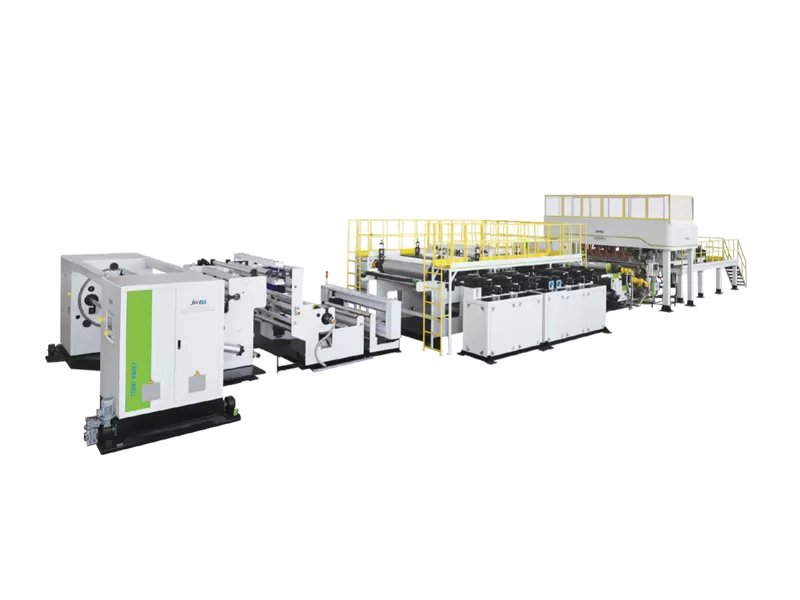
A properly engineered EVA/POE photovoltaic film line integrates gravimetric feeding, controlled extrusion, casting, cooling, stress relief, tension control, online thickness measurement, defect inspection, and automatic winding. JWELL's EVA/POE photovoltaic solar film extrusion line is designed around this integrated process concept, with published configurations ranging from 300–450 kg/h for a single-extrusion configuration to 900–1100 kg/h for a larger co-extrusion configuration.
Actual output is determined by the interaction between extruder capacity, resin formulation, film width, film thickness, line speed, die performance, cooling capacity, and winding stability. A machine may theoretically process a certain number of kilograms per hour, but that does not mean the same rate can be maintained while meeting the required film specifications.
For photovoltaic film, the usable production rate is more meaningful than the maximum theoretical throughput. If increasing extrusion rate causes thickness variation, surface defects, unstable winding, or excessive scrap, the additional nominal capacity does not necessarily translate into higher saleable production.
A production calculation should therefore begin with the finished-film specification. The equipment supplier needs to understand the target width, thickness range, annual production volume, operating hours, resin type, additive package, acceptable scrap rate, roll diameter, and expected product-change frequency.
EVA and POE should not be treated as identical materials simply because both are used as photovoltaic encapsulants. Their melt behavior, formulation requirements, additive packages, and processing windows can differ. The extrusion system must therefore provide sufficient melting and mixing while controlling thermal history.
JWELL specifies single-screw extrusion configurations for EVA and POE and uses a constant-temperature circulating-water cooling system around the screw and barrel. The stated purpose is to support stable plasticization while reducing the risk of premature crosslinking during processing.
This is an important design consideration. Premature crosslinking inside the extrusion system can increase melt pressure, create contamination, destabilize the die, and ultimately reduce production efficiency.
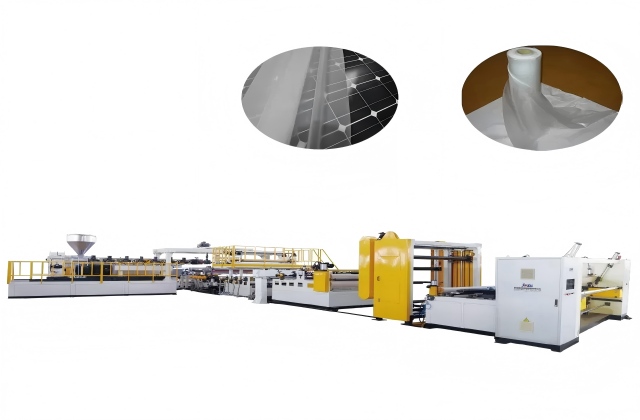
Photovoltaic encapsulant formulations may contain resin together with several functional additives. Accurate feeding is therefore fundamental to consistent film properties.
Gravimetric feeding measures material flow by weight rather than relying exclusively on volumetric assumptions. This is particularly valuable when different raw materials have different bulk densities or when low-density additives are incorporated into the formulation.
JWELL's photovoltaic film extrusion line incorporates an automatic gravimetric feeding system for solid, liquid additives and raw materials. This allows the formulation to be controlled at the beginning of the process rather than attempting to compensate for formulation variation downstream.
The extruder must deliver a homogeneous melt at a stable temperature and pressure. Melt quality directly influences die distribution, film thickness, surface appearance, and downstream stability.
Increasing screw speed can increase output, but it can also change shear, residence time, melt temperature, and pressure. Therefore, an extruder should be selected according to the complete process window rather than simply the largest possible screw diameter.
The screw and barrel cooling strategy is particularly important for EVA and POE because the processor needs to balance melting efficiency with thermal stability. A well-designed system allows sufficient plasticization without exposing the formulation to unnecessary heat.
Cross-web thickness uniformity depends on die design, melt distribution, die temperature, pressure stability, die-lip adjustment, material feeding, and cooling. It cannot be solved by the die alone.
Machine-direction thickness variation often indicates changes in extrusion pressure, screw speed, feeding, or melt temperature. Cross-direction variation may indicate die-distribution problems, thermal imbalance, or die-lip adjustment issues.
Online thickness measurement is therefore valuable because it changes quality control from periodic sampling to continuous process monitoring. JWELL's photovoltaic film line includes online thickness measurement and defect inspection for real-time production feedback.
| Process Variable | Primary Quality Impact | Typical Control Method |
|---|---|---|
| Feeding accuracy | Formulation consistency | Gravimetric feeding |
| Melt temperature | Plasticization and thermal stability | Multi-zone temperature control |
| Melt pressure | Thickness stability | Stable extrusion and die design |
| Die distribution | Cross-web thickness uniformity | Precision die adjustment |
| Cooling | Shrinkage and internal stress | Cooling roller and cooling bed |
| Winding tension | Roll quality | Micro-tension control |
The correct capacity depends on the manufacturer's product portfolio. A producer making several film thicknesses and widths may benefit from a line optimized for flexibility and stable changeovers. A high-volume producer with standardized products may prioritize continuous high-throughput operation.
| Configuration | Extruder | Film Thickness | Published Maximum Output |
|---|---|---|---|
| Single extrusion | JWS160 | 0.2–1.0 mm | 300–450 kg/h |
| Co-extrusion | JWS160 + WS180 | 0.2–1.0 mm | 750–850 kg/h |
| Co-extrusion | JWS180 + WS180 | 0.2–1.0 mm | 800–1000 kg/h |
| Co-extrusion | JWS180 + WS200 | 0.2–1.0 mm | 900–1100 kg/h |
These are JWELL's published maximum specifications for the listed configurations. Actual production capacity should be validated with the customer's resin, additive package, width, thickness, quality target, and operating conditions.
Cooling is not merely the final step for lowering polymer temperature. It affects dimensional stability, residual stress, shrinkage, surface quality, and winding behavior.
If cooling is insufficient or uneven, the film can continue changing dimensions after forming. This can result in unstable roll geometry, wrinkles, or excessive shrinkage.
JWELL's EVA/POE photovoltaic film line uses a cooling roller together with a stress-relieving cooling bed. The manufacturer states that this configuration is intended to support smooth film running, sufficient forming, and a shrinkage rate below 3% for the specified system.
Thin photovoltaic film is particularly sensitive to winding tension. Excessive tension can stretch the film and create dimensional distortion, while insufficient tension may result in loose rolls, wrinkles, telescoping, or uneven roll edges.
Stable winding therefore requires coordination between line speed, pulling force, roll diameter, material properties, and tension control.
JWELL specifies a micro-tension winder for its EVA/POE photovoltaic film system and states that the line can reach a maximum line speed of 18 m/min for the specified configuration.
A buyer should avoid evaluating equipment solely through extruder size and maximum output. A proper technical specification should include:
Resin type and formulation
Film width and thickness range
Target output at each product specification
Gravimetric feeding accuracy
Extrusion temperature-control range
Die configuration
Cooling capacity
Thickness measurement system
Defect inspection system
Winding tension range
Maximum roll diameter
Automatic control and recipe management
Factory acceptance-test criteria
The supplier should also demonstrate production using representative raw materials. This is particularly important when the line is expected to process both EVA and POE.
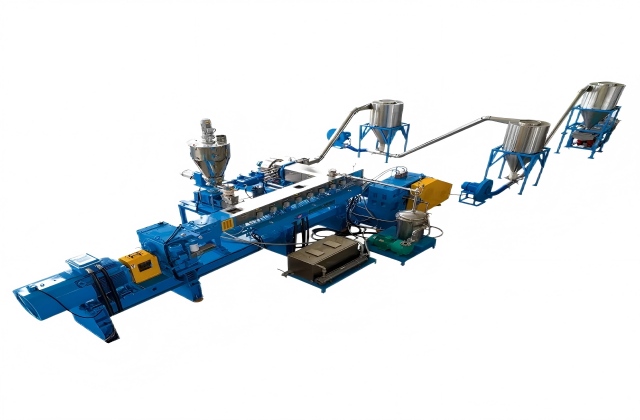
JWELL's approach is based on integrating feeding, extrusion, casting, cooling, tension control, inspection, and winding into one automated production system. Its product portfolio covers multiple plastic film and sheet technologies, while the company states that its screw and barrel manufacturing activities began in 1978 and that extrusion machinery production began after JWELL was established in 1997.
For manufacturers evaluating an EVA film extrusion line, the key issue is therefore not simply how much material the extruder can process. The more important question is whether the entire line can maintain the required film specification continuously.
When comparing a Jwell extruder with alternative equipment, buyers should evaluate screw configuration, feeding precision, temperature control, die technology, cooling, inspection, winding, and technical support as one system.
For manufacturers planning additional polymer-processing capacity, JWELL's wider plastic extrusion equipment portfolio can also provide a reference for future film, sheet, pipe, profile, and compounding projects.
The main challenge is increasing throughput without sacrificing thickness uniformity, optical quality, dimensional stability, and winding quality. The extrusion and downstream systems must remain synchronized as output increases.
A properly configured EVA/POE photovoltaic film line can be designed to process both materials, but the formulation and process window for each material should be validated before commercial production.
JWELL lists 0.2–1.0 mm as the product thickness range for the configurations shown on its EVA/POE photovoltaic film extrusion line page.
It allows thickness variation to be detected continuously instead of waiting for periodic laboratory sampling, which can reduce the amount of material produced before a deviation is identified.
No. A meaningful production target should consider saleable output, product quality, scrap, uptime, changeover time, and sustained process stability.
The acceptance test should define the raw material, film width, thickness, target output, line speed, thickness tolerance, visual quality, winding quality, feeding accuracy, and continuous production duration.
Building a high-output EVA film extrusion line for solar module production requires process integration rather than simply increasing extrusion capacity. Accurate feeding establishes formulation consistency, controlled extrusion creates a stable melt, precision die technology supports thickness uniformity, cooling manages shrinkage and stress, and tension-controlled winding protects the finished roll.
For photovoltaic film manufacturers, the most useful equipment comparison is therefore based on sustained production performance rather than a single headline throughput figure. A properly engineered JWELL system can integrate these critical functions into a controlled production platform for EVA and POE solar encapsulant film.
https://webstore.iec.ch/en/publication/64144
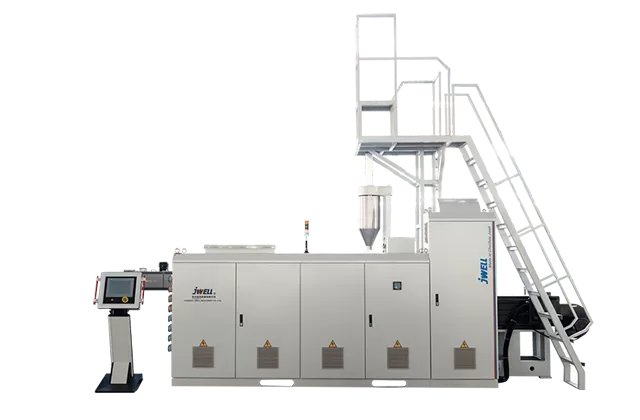
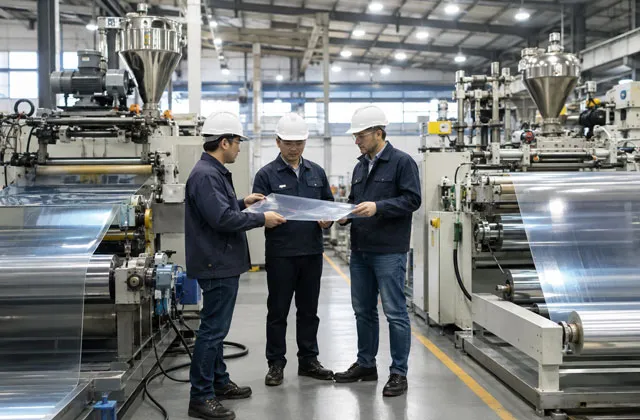
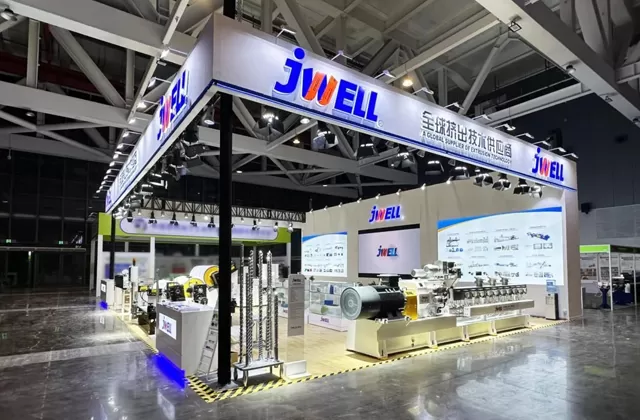
Jwell started manufacturing screws and barrels in 1978, making it one of the earliest screw and barrel manufacturers in China. Its brand, "Jinhailuo", has become well recognized in the industry. In 1997, Jwell was established as a plastic extrusion machinery manufacturer and began the production of extrusion machinery. Today, Jwell is the vice president unit of the China Plastics Machinery Industry Association and one of the technology leaders in the extrusion machinery industry.