Selecting a corrugated pipe extrusion line should begin with the finished pipe specification rather than the extruder model. Diameter, wall thickness, material, corrugation pitch, pipe structure, target output, line speed, cooling capacity, and product-change frequency determine the appropriate extrusion and forming system.
A line that is optimized for one small-diameter product may be unsuitable for large-diameter double-wall pipe. Likewise, a machine selected only for maximum line speed may not provide the dimensional stability required for different wall thicknesses and materials.
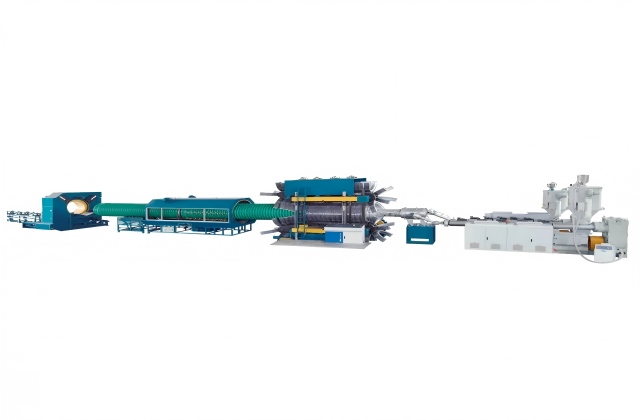
JWELL's corrugated pipe systems cover HDPE, PP, PVC and PA applications and include single-wall and double-wall configurations. Its published systems use different extrusion technologies according to material, together with horizontal or vertical corrugators, closed water cooling, vacuum forming, PLC control, and online belling or socketing on specified configurations.
Diameter is the starting point for equipment selection, but buyers should distinguish between outside diameter, inside diameter, effective flow diameter, and corrugation geometry.
For single-wall corrugated pipe, the forming mould primarily defines the outside profile. For double-wall pipe, the internal smooth wall and external corrugated wall must both remain within specification.
JWELL's published single-wall and double-wall corrugated equipment includes small-diameter configurations such as Φ8–20 mm, Φ12–50 mm, Φ12–63 mm, and Φ90–150 mm. Its horizontal double-wall systems extend into substantially larger internal-diameter ranges, including configurations up to ID 600–1500 mm.
Wall thickness is determined by material density, die geometry, extrusion output, haul-off speed, melt temperature, forming conditions, and the intended mechanical performance of the finished pipe.
For double-wall pipe, the inner and outer layers must be considered independently. The inner wall must provide the required smooth bore and dimensional accuracy, while the corrugated outer wall contributes structural performance and profile geometry.
The relationship between output and line speed is especially important. If output remains constant while haul-off speed increases, the amount of polymer deposited per unit length decreases and wall thickness can fall. If output increases without a corresponding adjustment in line speed, the wall can become thicker.
The corrugator converts the extruded tube into the final corrugated geometry. Mould alignment, vacuum, cooling, mould-block movement, and synchronization with extrusion all influence the finished pipe.
For double-wall pipe, the forming system must simultaneously maintain the inner diameter and establish the outer corrugated profile. Inconsistent cooling or vacuum can cause deformation before the polymer has sufficiently solidified.
JWELL's horizontal double-wall corrugated pipe system uses a shuttle-type forming structure, sealed water cooling, vacuum forming, and online double-layer flaring on specified models.
Output should always be defined together with pipe size and material. A small-diameter single-wall pipe can run at a much higher linear speed than a large-diameter double-wall pipe, while the larger pipe can still require substantially greater mass throughput.
| JWELL Configuration | Pipe Specification | Published Maximum Speed | Primary Consideration |
|---|---|---|---|
| JWDPG-25 | Φ8–20 mm | 25 m/min | High-speed small-diameter production |
| JWDPG-50 | Φ12–50 mm | 15 m/min | Diameter flexibility |
| JWDPG-63 | Φ12–63 mm | 10 m/min | Stable profile forming |
| JWSB150 | Φ90–150 mm | 5 m/min | Higher cooling and forming demand |
These figures are JWELL's published machine specifications. Actual production speed and output depend on resin, pipe structure, wall thickness, tooling, cooling, and quality requirements.
Material selection directly affects the extrusion architecture.
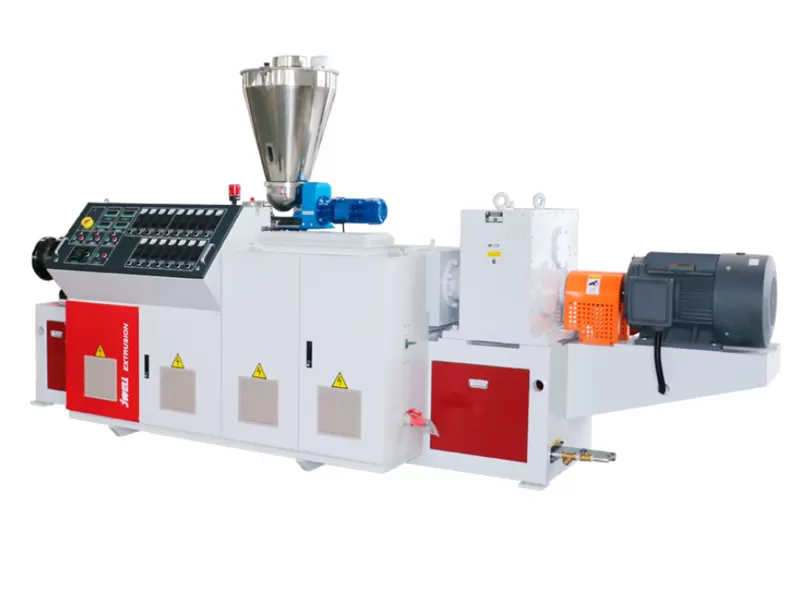
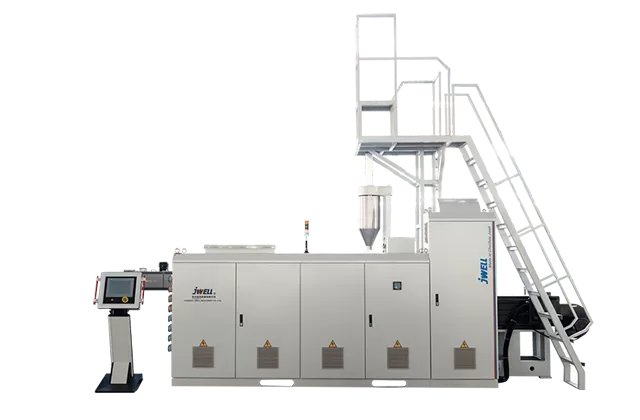
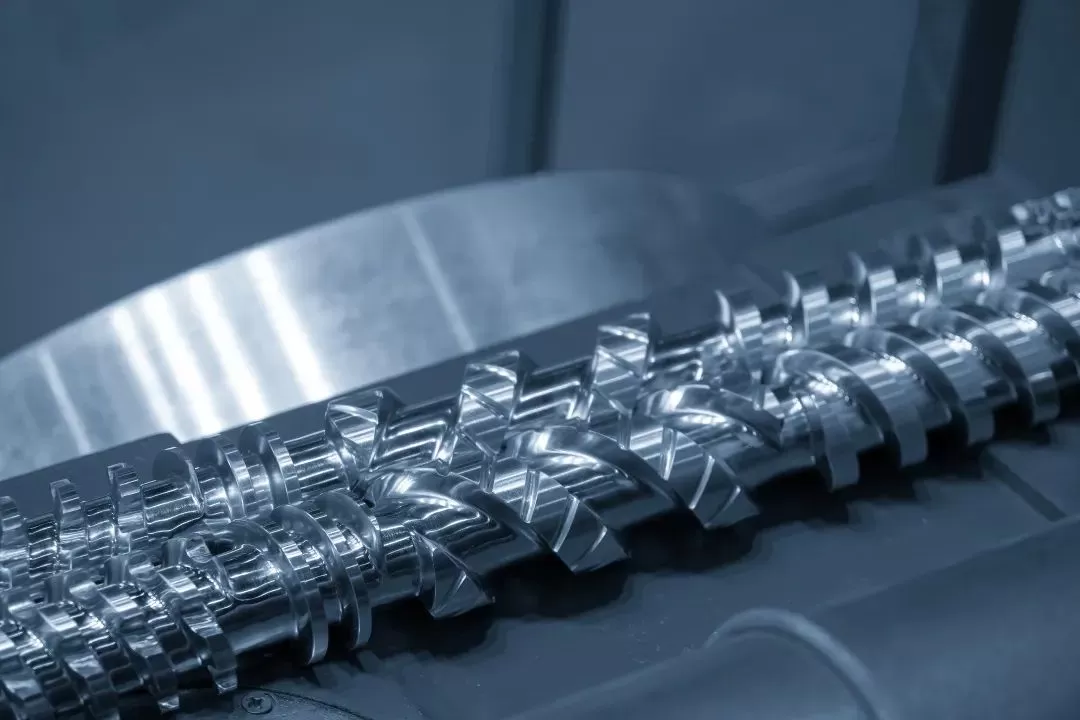
JWELL specifies high-efficiency single-screw extrusion for HDPE and PP in its corrugated pipe systems. For PVC, the company specifies conical twin-screw or parallel twin-screw extrusion depending on the system.
This difference is related to the processing behavior of the polymers. Polyolefins such as HDPE and PP are commonly processed through single-screw systems optimized for melting and conveying. PVC requires more careful thermal management and is commonly processed using twin-screw configurations.
A multi-material factory should therefore avoid selecting one extruder architecture simply because it offers the largest output. The equipment should reflect the actual material portfolio.
Cooling determines how quickly the polymer becomes dimensionally stable enough to retain the corrugated profile.
As pipe diameter and output increase, the amount of heat that must be removed from the polymer also increases. If cooling capacity becomes the limiting factor, increasing extruder output may simply result in distorted profiles or reduced line speed.
For large-diameter systems, cooling should therefore be calculated as part of the complete thermal balance, including melt temperature, material throughput, water temperature, cooling-surface area, residence time, and mould configuration.
Mould blocks determine the corrugation pitch, depth, outside diameter, and profile geometry. Their design therefore has a direct impact on pipe quality and production flexibility.
JWELL states that certain mini high-speed single-wall corrugated systems can produce two or three diameters using the same mould blocks. This can reduce tooling cost and changeover time in the specified applications.
For a factory producing several pipe sizes, mould-block flexibility can be more commercially valuable than a small increase in maximum line speed.
A corrugated pipe extrusion tooling design guide should not focus on die geometry alone. Tooling must be evaluated together with melt pressure, polymer shrinkage, cooling, vacuum, mould-block alignment, extrusion output, and final dimensional requirements.
For double-wall pipe, the die has to distribute polymer appropriately between the inner and outer structures. The forming system then establishes the final corrugation while cooling and vacuum stabilize the geometry.
Wall-thickness control begins with stable extrusion output. The extruder should deliver a predictable melt rate while the haul-off and forming system maintain a stable production speed.
In-process measurements should include outside diameter, inside diameter where applicable, wall thickness, corrugation pitch, and visual profile quality.
If thickness begins to drift, the operator should first determine whether the cause is output variation, line-speed variation, temperature instability, die distribution, or forming conditions rather than immediately changing the die gap.
Changeover time depends on mould-block design, die accessibility, material purging, temperature stabilization, control-system recipes, and downstream handling.
A production plant making many diameters should evaluate total changeover time across a complete production cycle. A line that saves only a few minutes per change can still create meaningful annual capacity when the plant performs multiple changes per shift.
For this reason, the product matrix should be provided to the equipment supplier before finalizing the tooling system.
PLC-based automation allows extrusion, corrugation, cooling, haul-off, cutting, and other downstream functions to operate according to coordinated recipes.
This is particularly valuable when a plant produces several pipe diameters. Stored recipes can reduce operator intervention and help maintain repeatable process conditions between production runs.
JWELL's corrugated pipe systems use PLC computer control, with automatic forming and downstream functions depending on the configuration.
A buyer should prepare a complete product matrix before requesting a quotation.
| Specification | Why It Matters |
|---|---|
| Material | Determines extrusion technology and temperature window |
| Diameter range | Determines die and mould-block range |
| Wall thickness | Determines material throughput |
| Corrugation pitch | Determines mould geometry |
| Pipe structure | Determines single- or multi-layer configuration |
| Target output | Determines extruder and cooling capacity |
| Target line speed | Determines forming and cooling requirements |
| Changeover frequency | Determines tooling flexibility |
| Socketing/belling | Determines downstream equipment |
| Automation level | Determines operator workload and repeatability |
JWELL's corrugated pipe portfolio covers small-diameter single-wall pipe, larger double-wall pipe, and different material systems. Its equipment combines extrusion, corrugation, water cooling, vacuum forming, PLC control, and downstream operations according to the selected configuration.
For manufacturers evaluating an hdpe corrugated pipe production solution, the equipment should be specified according to the complete diameter and wall-thickness range rather than a single nominal pipe size.
JWELL's broader product portfolio also provides Jwell extrusion machine solutions across pipe, film, sheet, profile, and compounding applications, allowing manufacturers to evaluate equipment from a wider extrusion-engineering perspective.
Start with material, diameter range, wall thickness, pipe structure, corrugation geometry, target output, line speed, and production mix. These parameters determine the extruder, die, corrugator, mould blocks, cooling system, and downstream equipment.
Not necessarily. Extruder capacity should be calculated from diameter, wall thickness, material density, line speed, and pipe structure rather than diameter alone.
Wall thickness is influenced by die geometry, extrusion output, haul-off speed, melt temperature, material behavior, and forming conditions. Stable output and stable line speed are fundamental.
Single-wall pipe consists of one corrugated structure, while double-wall pipe combines a smooth inner wall with a corrugated outer wall. Double-wall production therefore requires additional control of inner diameter, layer distribution, and bonding.
The polymer must solidify sufficiently to preserve the corrugation geometry and dimensional accuracy. As diameter and output increase, cooling can become one of the major limitations on production speed.
The buyer should provide material, diameter range, wall thickness, corrugation pitch, pipe structure, target output, line speed, annual production volume, applicable standards, downstream requirements, and expected product-change frequency.
Selecting a corrugated pipe extrusion line is fundamentally a product-engineering decision. Diameter determines the forming scale, wall thickness determines material throughput, material determines the extrusion technology, and target output determines the combined capacity of the extruder, corrugator, cooling system, and downstream equipment.
For manufacturers evaluating JWELL machinery, the most reliable approach is to define the complete product matrix first and configure the equipment around the actual production requirements. This creates a clearer path toward stable dimensions, predictable output, efficient tooling changes, and consistent long-term production.
https://www.jwellplasticextruder.com/products/horizontal-double-wall-corrugated-pipe-extrusion-line/
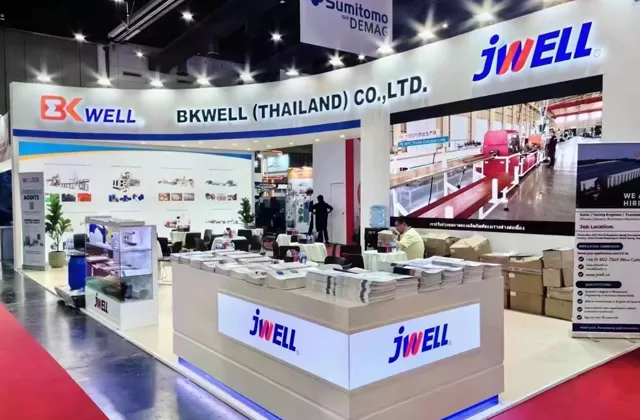
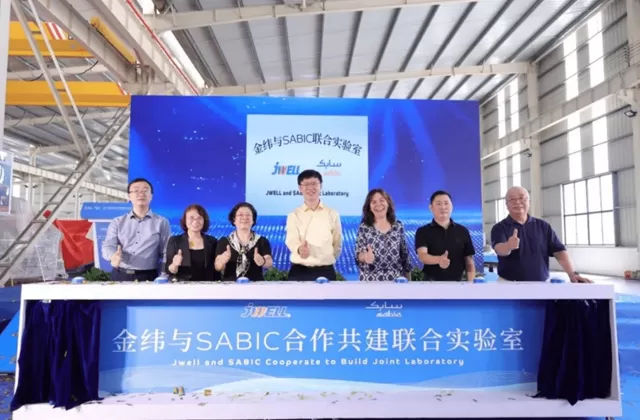
Jwell started manufacturing screws and barrels in 1978, making it one of the earliest screw and barrel manufacturers in China. Its brand, "Jinhailuo", has become well recognized in the industry. In 1997, Jwell was established as a plastic extrusion machinery manufacturer and began the production of extrusion machinery. Today, Jwell is the vice president unit of the China Plastics Machinery Industry Association and one of the technology leaders in the extrusion machinery industry.